
Back to jobs
New

Data Center Constructability Engineer

United States (Remote)

About the Company

Armada is the hyperscaler for the edge, delivering modular AI infrastructure from first deployment to AI factory with speed, scale and sovereignty. Named one of Fast Company's Most Innovative Companies and to the CNBC Disruptor 50, Armada’s solutions are deployed in over 60 countries globally for organizations ranging from energy to defense. 

With nearly $500 million in funding to date, Armada is backed by leading investors including Founders Fund, Lux, BlackRock and Microsoft (M12), alongside strategic partnerships with Microsoft, Dell, Palantir, NVIDIA, SpaceX, and Skydio. We are building the infrastructure layer for sovereign and edge AI - rugged, deployable compute for customers that cannot rely on centralized cloud.

Working at Armada means taking ownership, driving autonomy, and delivering impact. You’ll tackle challenges that haven’t been solved before and help build something transformative from the ground up. What you do here will not only define your career but help further Armada’s mission to bridge the digital divide for customers around the world. 


About the Role  

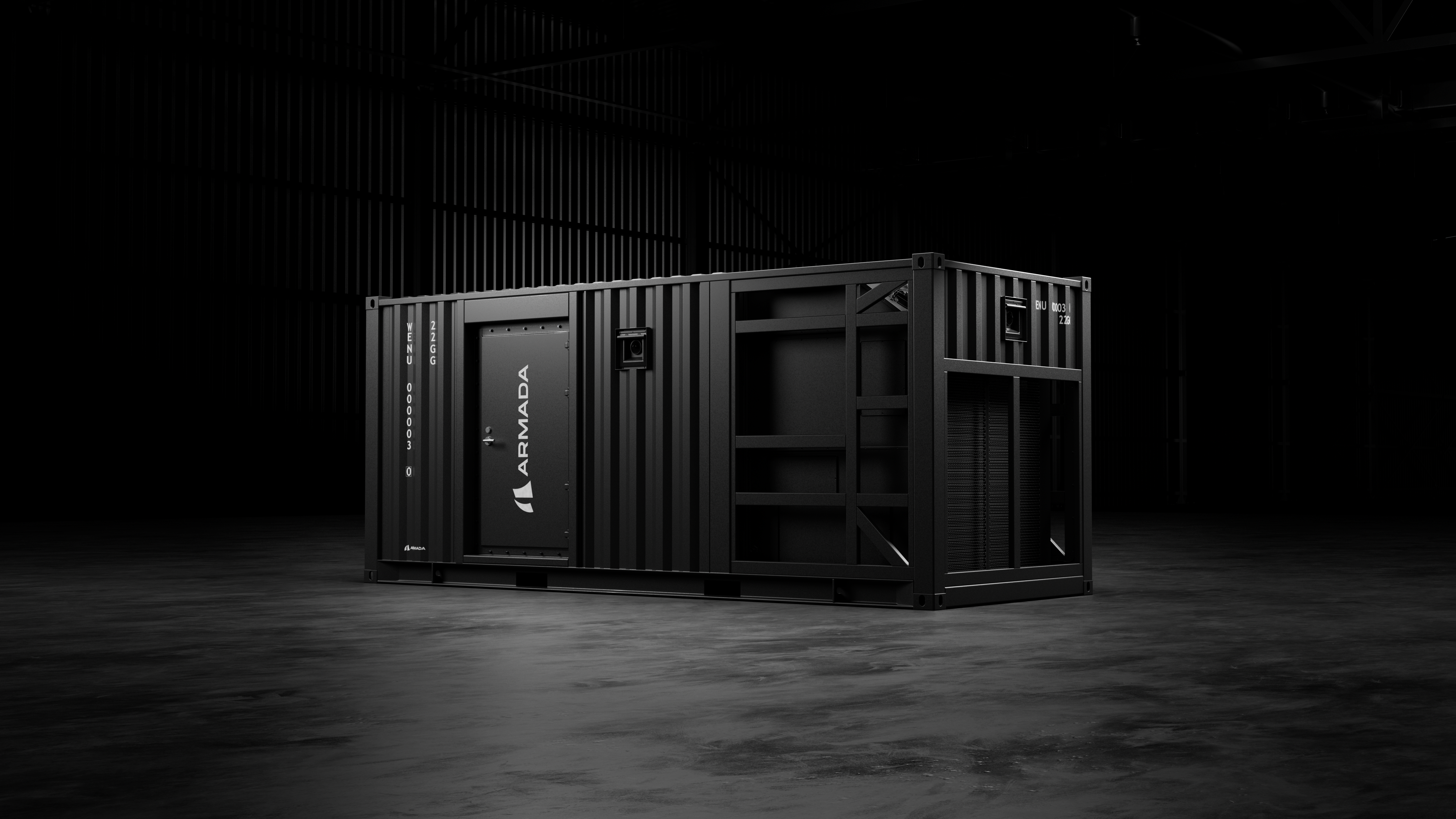
Armada is hiring a Data Center Constructability Engineer to support the Galleon and Leviathan product lines — a brand-new capability for the company. As we scale Modular Data Center (MDC) deployments across a growing number of sites and geographies, we need someone who can own the constructability thread that runs from early site due diligence and design review through pre-construction planning, fabrication, installation, and commissioning, and make sure what gets designed can actually be built, on schedule, everywhere we operate.


You will review Leviathan/Galleon MDC and site designs for buildability, validate deployment methodologies (crane and access, sequencing, tolerances, and fit-up) before they're locked in, and build the standardized, repeatable construction playbooks that turn site execution into a repeatable process instead of a one-off plan per site. You'll also be the constructability point of contact linking Armada's product and engineering teams with fabricators, general contractors, and local delivery partners, supporting pre-construction planning and reviewing design packages and shop drawings to make sure what's designed matches how it will actually be built in the field.


Location

This role is Remote in the U.S. (approximately 30–40% travel to project sites, fabrication facilities, and vendor/GC locations).


What You'll Do (Key Responsibilities) 

  • Constructability review & product feedback loop — Review Leviathan/Galleon MDC and site designs (civil, structural, architectural, mechanical, electrical, piping, controls, ICT, IT) at each stage gate and feed constructability input directly into product development — modularity, transport and lifting constraints, ISO container/skid interfaces, installation sequencing, and commissioning strategy — catching buildability issues while they are still cheap to fix, before they are locked into issued-for-construction drawings.


  • Deployment methodology validation & site-specific risk assessment — Validate deployment methodologies for Leviathan across candidate and active sites worldwide (crane selection and access, laydown and site logistics, erection/installation sequencing, tolerances and fit-up), and own early constructability due diligence that flags site-specific vendor, access, or execution risk before it causes late-stage redesign or slips a deployment.


  • Standardized, repeatable construction playbooks — Develop and maintain repeatable construction playbooks, sequencing plans, and methods of procedure for single-unit and campus-scale Leviathan deployments, turning site execution into a repeatable, SKU-like process instead of a one-off plan per site and region.


  • Hands-on constructability analysis for new products & first-of-a-kind sites — Personally lead constructability analysis (crane/lift studies, transport and logistics modeling, installation sequencing) for new Armada products or site conditions where no vendor, GC, or prior-site precedent exists yet, establishing the buildability basis in-house before handing execution off to local contractors and fabricators.


  • Pre-construction planning & cross-discipline coordination through execution — Act as the constructability point of contact linking Armada product engineering with civil, structural, architectural, mechanical, electrical, piping, controls, ICT, and IT disciplines, fabricators, and general contractors; support pre-construction planning (schedule, cost, logistics, procurement lead times) and review design packages and shop drawings for buildability, ensuring what is designed can actually be fabricated, transported, and installed as sequenced and on schedule.


  • Constructability governance, documentation & readiness sign-off — Build and maintain constructability guidelines, buildability/site-readiness checklists, and review workflows by geography; track open constructability items and lessons learned across active sites; and provide the final constructability sign-off confirming a site's design and execution plan are buildable and ready to proceed to construction.
  • Own the integration architecture across Armada’s systems landscape: define how systems connect, what data flows where, and how changes in one system propagate downstream. 
  • Map and maintain a clear picture of Armada’s full systems stack — data structures, APIs, field mappings, and integration dependencies. 
  • Monitor upstream vendor release notes and system changes; assess downstream impact before changes propagate; coordinate remediation across functions before issues surface in production. 
  • Manage integration sequencing: when multiple teams are building systems that integrate with each other, determine what goes in first, flag bridging risks, and prevent rework from parallel implementations. 
  • Define and govern integration patterns, including APIs, iPaaS, middleware, and data warehouse/lakehouse patterns. 
  • Evaluate build vs. buy decisions and integration approaches with a bias toward simplicity, scalability, and security. 
  • Partner with data and engineering teams to ensure trustworthy reporting and analytics with clean data definitions. 

Orphan System Stewardship 

  • Serve as interim owner for any system that doesn’t have a clear functional home — including systems in transition as Armada scales (e.g., CLM, HRIS tools, and adjacent G&A tooling). 
  • Proactively identify orphan systems, stabilize them, and plan for handoff to a functional owner when one is in place. 
  • Anticipate near-term orphan systems tied to new implementations and hiring plans; ensure continuity of ownership through each transition. 
  • Ensure system design supports clean, auditable processes and reduces operational overhead for the functions that will eventually own them. 

Cross-Functional Systems Coordination 

  • Run a regular cross-functional systems review: pull together system stakeholders across the organization to review roadmaps, active implementations, and integration dependencies — not to dictate, but to surface conflicts and drive alignment before they become rework. 
  • Facilitate trade-off conversations when system needs across functions conflict: help stakeholders understand the cost of their requirements on adjacent teams’ systems, and reach compromises that minimize aggregate work across the org. 
  • Serve as Armada’s internal authority on systems governance: establish and maintain company-wide standards for integration patterns, data quality, access controls, and change management — without owning or overriding what GTM and R&D manage directly. 
  • Partner with RevOps and R&D systems counterparts to ensure interoperability across the full company systems landscape, with clean definitions for shared core objects (customer, product, employee, asset, etc.). 
  • Own system-level compliance posture: role-based access, audit trails, segregation of duties, and data protection practices across all systems — including those managed by other functions. 
  • Support audits and future compliance readiness (e.g., SOC 2/SOX-aligned controls) as a company-wide function, regardless of which team owns a given system. 

G&A and Core Business Systems 

  • Own the strategy, roadmap, and execution for Armada’s G&A systems ecosystem: Finance/ERP, HRIS/ATS, Legal, procurement, and adjacent business operations tools. 
  • Run these systems like a product: define outcomes, prioritize ruthlessly, and deliver measurable improvements in cycle time, data quality, and user experience. 
  • Manage vendor relationships, contract renewals, tool rationalization, and licensing strategy for owned systems. 

Automation and Workflow Efficiency 

  • Identify and eliminate manual work through automation: workflows, orchestration, document processing, approvals, and self-service. 
  • Enable AI-assisted internal workflows (routing, summarization, exception handling, reconciliation support, employee self-service) with strong security and governance guardrails. 

Operating Model and Governance 

  • Establish the operating model for systems work: intake, prioritization, documentation standards, testing, change management, training, and post-launch support. 
  • Partner with the VP of Business Operations on roadmap prioritization and cross-functional alignment. 

AI Enablement 

  • Define Armada’s internal AI tech stack, ensuring interoperability across systems and alignment with company data architecture. 
  • Build and own an AI-first operating model: standardized tooling, workflows, and clear expectations for how teams leverage AI in daily work. 
  • Develop role-specific AI playbooks (Finance, Ops, People, etc.) that translate AI capabilities into day-to-day workflow improvements. 
  • Instrument AI usage across teams to track adoption, identify gaps, and measure productivity impact. 


Required Qualifications

  • Bachelor's degree in Construction Management, Engineering, Architecture, or related field.
  • 5–7 years of hands-on construction management, constructability/buildability review, or design experience on industrial, modular, or mission-critical facility projects, including direct general contractor or fabrication-yard experience.
  • Working knowledge of modular/prefabricated construction methods, crane/lift and rigging planning, transport and site logistics, and means-and-methods planning across multiple codes and jurisdictions.
  • Comfort operating with a high degree of autonomy — you'll be defining the playbook, not inheriting one.
  • Willingness and ability to travel approximately 30–40% to project sites, fabrication facilities, and construction locations worldwide.


Preferred Qualifications

  • Certification such as CCP (Certified Constructability Professional), CCM (Certified Construction Manager), or PMP.
  • Prior experience with modular, prefabricated, ISO container, or skid-mounted construction methodologies, ideally for data centers or other mission-critical/industrial facilities, including international or multi-region project experience.
  • Exposure to data center–specific constructability considerations: raised platform/foundation systems, equipment yard layout (generators, transformers, chillers, PEMB), and MEP/controls integration sequencing.
  • Knowledge of building codes and regulations.
  • Experience reading, interpreting, and creating construction drawings, specifications, and submittal documents.
  • Experience building constructability review programs, buildability checklists, or governance processes for a growing team or portfolio, rather than only executing against existing ones.
  • Background collaborating directly with CSA, MEP, control, ICT, and IT engineering teams, fabricators, general contractors, and local delivery partners across multiple regions or countries.
  • Experience with scheduling, cost, and logistics planning tools (e.g., Primavera P6, MS Project) to support pre-construction readiness.


Compensation & Benefits

For U.S. Based candidates: To ensure fairness and transparency, the starting base salary range for this role for candidates in the U.S. are listed, varying based on location experience, skills, and qualifications.  In addition to base salary, this role will also be offered equity and subsidized benefits (details available upon request).

We use a geographic pay structure based on cost-of-labor markets. 


  • Tier 1 (e.g., SF Bay Area, NYC, Seattle): $115,184 – $143,980
  • Tier 2 (most U.S. metro areas): $100,160 – $125,200 
  • Tier 3 (other cities): $95,152 – $118,940


Final compensation will be determined by experience, scope, and level, and may vary from the posted range. 

In addition to base salary, this role will also be offered equity and subsidized benefits (details available upon request).


Benefits

  • Competitive base salary and equity
  • Medical, dental, and vision (subsidized cost)
  • Health savings accounts (HSA), flexible spending accounts (FSA), and dependent care FSAs (DCFSA)
  • Retirement plan options, including 401(k) and Roth 401(k)
  • Unlimited paid time off (PTO)
  • 14 paid company holidays per year

#LI-SM2

#LI-Remote

#LI-Remote

Compensation

$100,160 - $125,200 USD

You're a Great Fit if You're

  • A go-getter with a growth mindset. You're intellectually curious, have strong business acumen, and actively seek opportunities to build relevant skills and knowledge 
  • A detail-oriented problem-solver. You can independently gather information, solve problems efficiently, and deliver results with a "get-it-done" attitude 
  • Thrive in a fast-paced environment. You're energized by an entrepreneurial spirit, capable of working quickly, and excited to contribute to a growing company
  • A collaborative team player. You focus on business success and are motivated by team accomplishment vs personal agenda 
  • Highly organized and results-driven. Strong prioritization skills and a dedicated work ethic are essential for you 


Equal Opportunity Statement

At Armada, we are committed to fostering a work environment where everyone is given equal opportunities to thrive. As an equal opportunity employer, we strictly prohibit discrimination or harassment based on race, color, gender, religion, sexual orientation, national origin, disability, genetic information, pregnancy, or any other characteristic protected by law. This policy applies to all employment decisions, including hiring, promotions, and compensation. Our hiring is guided by qualifications, merit, and the business needs at the time.


Unsolicited Resumes and Candidates

Armada does not accept unsolicited resumes or candidate submissions from external agencies or recruiters. All candidates must apply directly through our careers page. Any resumes submitted by agencies without a prior signed agreement will be considered unsolicited and Armada will not be obligated to pay any fees.


Apply for this job

*

indicates a required field

Phone
Resume/CV*

Accepted file types: pdf, doc, docx, txt, rtf


Education

Select...
Select...

Select...
Select...

U.S. Standard Demographic Questions

We invite applicants to share their demographic background. If you choose to complete this survey, your responses may be used to identify areas of improvement in our hiring process.
Select...
Select...
Select...
Select...
Select...
Select...

Voluntary Self-Identification

For government reporting purposes, we ask candidates to respond to the below self-identification survey. Completion of the form is entirely voluntary. Whatever your decision, it will not be considered in the hiring process or thereafter. Any information that you do provide will be recorded and maintained in a confidential file.

As set forth in Armada’s Equal Employment Opportunity policy, we do not discriminate on the basis of any protected group status under any applicable law.

Select...
Select...
Race & Ethnicity Definitions

If you believe you belong to any of the categories of protected veterans listed below, please indicate by making the appropriate selection. As a government contractor subject to the Vietnam Era Veterans Readjustment Assistance Act (VEVRAA), we request this information in order to measure the effectiveness of the outreach and positive recruitment efforts we undertake pursuant to VEVRAA. Classification of protected categories is as follows:

A "disabled veteran" is one of the following: a veteran of the U.S. military, ground, naval or air service who is entitled to compensation (or who but for the receipt of military retired pay would be entitled to compensation) under laws administered by the Secretary of Veterans Affairs; or a person who was discharged or released from active duty because of a service-connected disability.

A "recently separated veteran" means any veteran during the three-year period beginning on the date of such veteran's discharge or release from active duty in the U.S. military, ground, naval, or air service.

An "active duty wartime or campaign badge veteran" means a veteran who served on active duty in the U.S. military, ground, naval or air service during a war, or in a campaign or expedition for which a campaign badge has been authorized under the laws administered by the Department of Defense.

An "Armed forces service medal veteran" means a veteran who, while serving on active duty in the U.S. military, ground, naval or air service, participated in a United States military operation for which an Armed Forces service medal was awarded pursuant to Executive Order 12985.

Select...

Voluntary Self-Identification of Disability

Form CC-305
Page 1 of 1
OMB Control Number 1250-0005
Expires 07/31/2029

Why are you being asked to complete this form?

We are a federal contractor or subcontractor. The law requires us to provide equal employment opportunity to qualified people with disabilities. We have a goal of having at least 7% of our workers as people with disabilities. The law says we must measure our progress towards this goal. To do this, we must ask applicants and employees if they have a disability or have ever had one. People can become disabled, so we need to ask this question at least every five years.

Completing this form is voluntary, and we hope that you will choose to do so. Your answer is confidential. No one who makes hiring decisions will see it. Your decision to complete the form and your answer will not harm you in any way. If you want to learn more about the law or this form, visit the U.S. Department of Labor’s Office of Federal Contract Compliance Programs (OFCCP) website at www.dol.gov/ofccp.

How do you know if you have a disability?

A disability is a condition that substantially limits one or more of your “major life activities.” If you have or have ever had such a condition, you are a person with a disability. Disabilities include, but are not limited to:

  • Alcohol or other substance use disorder (not currently using drugs illegally)
  • Autoimmune disorder, for example, lupus, fibromyalgia, rheumatoid arthritis, HIV/AIDS
  • Blind or low vision
  • Cancer (past or present)
  • Cardiovascular or heart disease
  • Celiac disease
  • Cerebral palsy
  • Deaf or serious difficulty hearing
  • Diabetes
  • Disfigurement, for example, disfigurement caused by burns, wounds, accidents, or congenital disorders
  • Epilepsy or other seizure disorder
  • Gastrointestinal disorders, for example, Crohn's Disease, irritable bowel syndrome
  • Intellectual or developmental disability
  • Mental health conditions, for example, depression, bipolar disorder, anxiety disorder, schizophrenia, PTSD
  • Missing limbs or partially missing limbs
  • Mobility impairment, benefiting from the use of a wheelchair, scooter, walker, leg brace(s) and/or other supports
  • Nervous system condition, for example, migraine headaches, Parkinson’s disease, multiple sclerosis (MS)
  • Neurodivergence, for example, attention-deficit/hyperactivity disorder (ADHD), autism spectrum disorder, dyslexia, dyspraxia, other learning disabilities
  • Partial or complete paralysis (any cause)
  • Pulmonary or respiratory conditions, for example, tuberculosis, asthma, emphysema
  • Short stature (dwarfism)
  • Traumatic brain injury
Select...

PUBLIC BURDEN STATEMENT: According to the Paperwork Reduction Act of 1995 no persons are required to respond to a collection of information unless such collection displays a valid OMB control number. This survey should take about 5 minutes to complete.