
Sub-Investigator
About Care Access
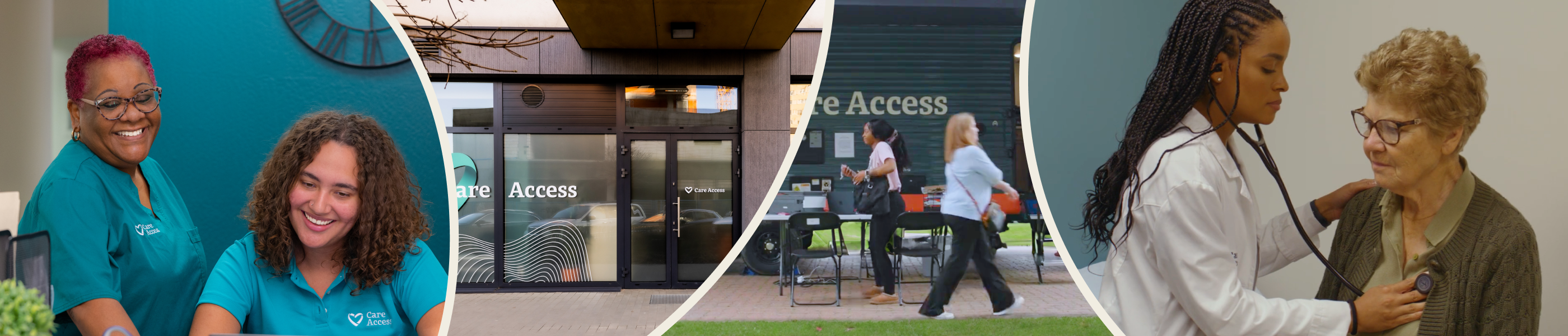
Care Access is working to make the future of health better for all. With hundreds of research locations, mobile clinics, and clinicians across the globe, we bring world-class research and health services directly to communities that often face barriers to care. We are dedicated to ensuring that every person has the opportunity to understand their health, access the care they need, and contribute to the medical breakthroughs of tomorrow.
With programs like Future of Medicine, which makes advanced health screenings and research opportunities accessible to communities worldwide, and Difference Makers, which supports local leaders to expand their community health and wellbeing efforts, we put people at the heart of medical progress. Through partnerships, technology, and perseverance, we are reimagining how clinical research and health services reach the world. Together, we are building a future of health that is better and more accessible for all.
To learn more about Care Access, visit www.CareAccess.com.
How This Role Makes a Difference
The Sub-Investigator will be responsible for regional travel mixed with remote tele-medicine work to support our clinical research studies. Additionally, our Sub-Investigator will be skilled in administering investigational products (IV, SC, TD, IM, PO administration), performing physical examinations, monitoring for investigational product related reactions, among other duties beyond the standard clinical research Sub-Investigator role. Care Access is looking for highly motivated Nurse Practitioners or Physician’s Assistants to support clinical trial related activities in states throughout the USA.
How You'll Make An Impact
- Work closely with the Principal Investigator to oversee the execution of study protocols, delegating study related duties to site staff, as appropriate, and ensuring site compliance with study protocols, study-specific laboratory procedures, standards of Good Clinical Practice (GCP), Standard Operating Procedures (SOPs), quality (QA/QC) procedures, OSHA guidelines, and other state and local regulations as applicable.
- Attends and participates in meetings with the director, other managers, and staff as necessary.
- Complies with regulatory requirements, policies, procedures, and standards of practice.
- Read and understand the informed consent form, protocol, and investigator's brochure.
- Be available to see subjects virtually or in-person as dictated by project design, answer their questions, and resolve medical issues during the study visit.
- Sign and ensure that the study documentation for each study visit is completed.
- Perform all study responsibilities in compliance with the IRB approved protocol.
- Administration of Investigational Products (via subcutaneous, transdermal, intramuscular, intravenous, or oral routes).
- Proficiency in starting, monitoring, and maintaining intravenous lines.
- Proficiency in phlebotomy, proper blood collection practices, and laboratory processing practices (can be learned)
- Contribute as an active member of clinicians involved in the management of infusion or other investigational product related reactions.
- Maintain a clean, efficient clinical area to assure the highest standards of patient care.
- Follow safety and PPE procedures as well as maintain proper documentation of infusion procedures.
- Timely communications with internal teams, investigators, review boards, and study subjects
- Perform trial procedures as per delegation which can include the following but not limited to:
- Prescreen study candidates by telephone and review exclusionary conditions or medications prior to scheduling screening appointment.
- Obtain informed consent per SOP.
- Administer delegated study questionnaires, as appropriate.
- Collect and evaluate medical records.
- Complete visit procedures and ensure proper specimen collection, processing, and shipment in accordance with protocol.
- Train others and complete basic clinical procedures, such as blood draws, vital signs, ECGs, etc.
- Review screening documentation and approves subjects for admission to study.
- Review admission documentation and approves subject for randomization.
- Provide ongoing assessment of the study subject/patient to identify Adverse Events.
- Ensure that serious and unexpected adverse events are reported promptly to the Pl.
- Review and evaluates all study data and comments to the clinical significance of any out-of-range results.
- Perform physical examinations as part of screening evaluation and active study conduct.
- Provide medical management of adverse events as appropriate.
- Dispense study medication per protocol and/or IVRS systems. Educate patient on proper administration and importance of compliance.
- Monitor patient progress on study medication.
- Other duties as assigned.
The Expertise Required
- Ability to check, perform, and document vitals as well as EKG (ECG)
- Phlebotomy and expert IV skills
- Excellent working knowledge of medical and research terminology
- Excellent working knowledge of federal regulations, good clinical practices (GCP)
- Ability to communicate and work effectively with a diverse team of professionals.
- Strong organizational skills: Able to prioritize, support, and follow through on assignments with good understanding of medical terminology.
- Communication Skills: Strong verbal and written communication skills as evidenced by positive interactions with coworkers, management, clients and vendors.
- Communication Skills: Strong verbal and written communication skills as evidenced by positive interactions with coworkers, management, clients and vendors.
- Team Collaboration Skills: Work effectively and collaboratively with other team members to accomplish mutual goals. Bring positive and supportive attitude to achieving these goals.
- Strong computer skills with demonstrated abilities using clinical trials database, IVR systems, electronic data capture, MS word and excel.
- Ability to balance tasks with competing priorities.
- Critical thinker and problem solver.
- Curiosity and passion to learn, innovative, and able to take thoughtful risks while communicating concerns and mitigations.
- Good management and organizational skills, understanding of medical procedures.
- Exceptional interpersonal skills, willingness to the ability to work independently.
- Ability to lift a minimum of 50 pounds.
- Command of professional and Business English (written and spoken).
- You must have the authorization to work in the US for any employer.
- You must not need visa sponsorship, either now or in the future.
- You must live in the USA and be willing and able to travel with 24–36-hour notice
Certifications/Licenses, Education, and Experience
- Minimum Education:
- Master’s Level Science Degree. Nurse Practitioner or Physician Assistant with 5+ years of clinical experience.
- Minimum Experience:
- Clinical Practice Experience Desired with Infusion Skillset.
- Currently licensed in good standing in one or more states.
- A minimum of 1 year of relevant work experience as Sub-Investigator (preferred) in a Clinical Research setting.
- Preferred at least one (1) year of experience as a Clinical Research Coordinator or willingness to learn.
How We Work Together
- Location: This is an on-site position with regional commute requirements.
- Travel: Regularly planned travel within the region will be required as part of the role.
- Physical demands associated with this position Include: The ability to use keyboards and other computer equipment.
The expected pay range for this role is $120,000 - $150,000 USD per year for full time team members.
Benefits & Perks (US Full Time Employees)
- Paid Time Off (PTO) and Company Paid Holidays
- 100% Employer paid medical, dental, and vision insurance plan options
- Health Savings Account and Flexible Spending Accounts
- Bi-weekly HSA employer contribution
- Company paid Short-Term Disability and Long-Term Disability
- 401(k) Retirement Plan, with Company Match
Mandatory Employer Disclosures:
Notice to Illinois applicants: Applicants are not obligated to disclose expunged juvenile records or adjudication, arrest, or conviction.
Notice to Connecticut applicants: Care Access may require applicants to submit to a urinalysis drug test in connection with an application for employment.
Notice to Arizona, Georgia, Indiana, and North Dakota applicants: Care Access complies with applicable laws prohibiting smoking in and around places of employment.
Notice to Massachusetts applicants: It is unlawful in Massachusetts to require or administer a lie detector test as a condition of employment or continued employment. An employer who violates this law shall be subject to criminal penalties and civil liability.
Notice to Rhode Island applicants: Care Access complies with Rhode Island law prohibiting smoking in enclosed areas within places of employment. Care Access is also subject to is subject to Chapters 29–38 of Title 28 of the Rhode Island General Laws.
Notice to Maryland applicants: UNDER MARYLAND LAW, AN EMPLOYER MAY NOT REQUIRE OR DEMAND, AS A CONDITION OF EMPLOYMENT, PROSPECTIVE EMPLOYMENT, OR CONTINUED EMPLOYMENT, THAT AN INDIVIDUAL SUBMIT TO OR TAKE A LIE DETECTOR OR SIMILAR TEST. AN EMPLOYER WHO VIOLATES THIS LAW IS GUILTY OF A MISDEMEANOR AND SUBJECT TO A FINE NOT EXCEEDING $100.
Diversity & Inclusion
We work with and serve people from diverse cultures and communities around the world. We are stronger and better when we build a team representing the communities we support. We maintain an inclusive culture where people from a broad range of backgrounds feel valued and respected as they contribute to our mission.
We are an equal opportunity employer, and all qualified applicants will receive consideration for employment without regard to, and will not be discriminated against on the basis of, race, color, religion, sex, sexual orientation, gender identity or expression, pregnancy, age, national origin, disability status, genetic information, protected veteran status, or any other characteristic protected by law.
Care Access is unable to sponsor work visas at this time.
If you need an accommodation to apply for a role with Care Access, please reach out to: TalentAcquisition@careaccess.com
Create a Job Alert
Interested in building your career at Care Access? Get future opportunities sent straight to your email.
Apply for this job
*
indicates a required field