
Clinical Research Assistant, PRN (Registered Nurse)
About Care Access
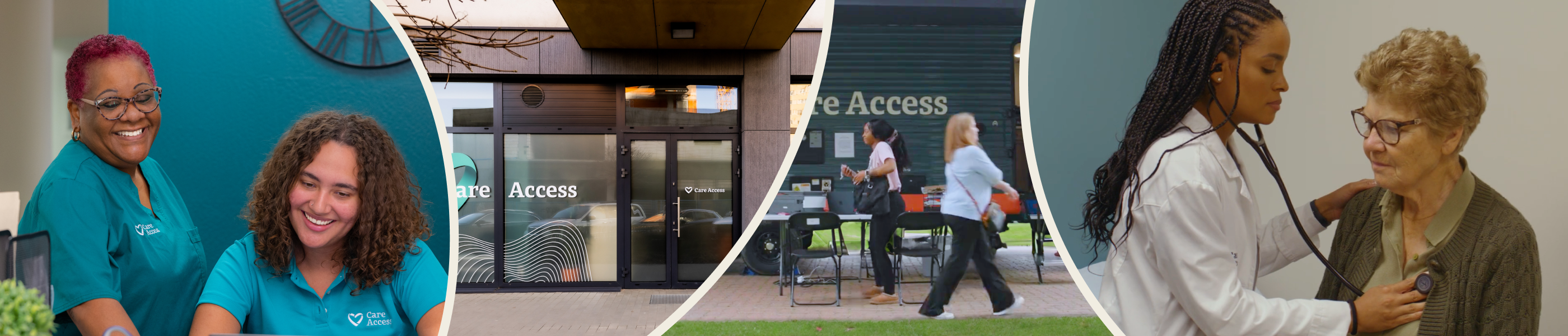
Care Access is working to make the future of health better for all. With hundreds of research locations, mobile clinics, and clinicians across the globe, we bring world-class research and health services directly to communities that often face barriers to care. We are dedicated to ensuring that every person has the opportunity to understand their health, access the care they need, and contribute to the medical breakthroughs of tomorrow.
With programs like Future of Medicine, which makes advanced health screenings and research opportunities accessible to communities worldwide, and Difference Makers, which supports local leaders to expand their community health and wellbeing efforts, we put people at the heart of medical progress. Through partnerships, technology, and perseverance, we are reimagining how clinical research and health services reach the world. Together, we are building a future of health that is better and more accessible for all.
To learn more about Care Access, visit www.CareAccess.com.
How This Role Makes a Difference
Bring clinical research to your community on your schedule.
Join the Future of Medicine program at Care Access, where we’re bringing clinical research directly into local communities. As a Clinical Research Assistant, PRN (Registered Nurse), you’ll play a key role in delivering life-changing research opportunities to participants but with the flexibility to work when and where it fits your life.
How You'll Make An Impact
In this event-based role, you’ll:
- Support participant care and event operations, including phlebotomy, specimen handling, and documentation (paper or electronic).
- Help set up and manage clinical research events to ensure they run smoothly, safely, and compliantly.
- Be part of a mobile, mission-driven team advancing the future of healthcare access.
This is not your traditional part-time job. It is flexible, purpose-driven work that fits your schedule. You’ll opt into local events through our scheduling system and log actual hours worked after each one. Whether you want to pick up one event a month or several a week, you’ll be helping make clinical research more accessible for everyone.
- Clinical & Participant Care: Perform venipuncture and capillary collections (as applicable) while maintaining aseptic technique and participant comfort. Handle and prepare biospecimens with care — labeling, processing, packaging, and transferring or shipping under proper chain-of-custody and temperature controls. Communicate clearly and promptly escalate any safety or quality concerns to onsite leadership.
- Study Operations & Data Management: Accurately document all procedures and results in approved systems (e-source, logs, etc.) according to ALCOA-C++ and ensure regulatory compliance (GxP, HIPAA). Follow established SOPs to help keep each event audit-ready and compliant.
- Participant Experience & Event Operations: Welcome participants and help guide them through event flow. Set up and break down event stations, prepare kits and supplies, and maintain a safe, organized, and professional workspace that reflects Care Access’ high standards.
- Site & Administrative Support: Assist with light administrative and inventory tasks that keep the event running smoothly, from restocking supplies to supporting team coordination.
The Expertise Required
- Clinical Expertise: Proficiency in venipuncture and specimen handling best practices, with strong attention to labeling, documentation, and chain-of-custody integrity.
- Participant Care: Clear, compassionate communication skills and professionalism when engaging with participants and community partners.
- Tech Readiness: Comfort using mobile apps and e-source tools for real-time logging and documentation.
- Dependability & Adaptability: Reliable, punctual, and team-oriented — able to thrive in dynamic event environments and work independently under event-day guidance.
- Mission Mindset (optional addition): Motivated by bringing clinical research to local communities and expanding access to the future of medicine.
Certifications/Licenses, Education, and Experience
- Experience: Minimum of 1 year performing phlebotomy and specimen handling activities.
- Active, unrestricted RN license in the state of practice.
- Active and unrestricted State Board of Nursing license in good standing
How We Work Together
- Location: This is an on-site position with less than 10% travel requirements. Occasional planned travel may be required as part of the role.
- Physical demands associated with this position Include: The ability to use keyboards and other computer equipment.
- Walking - 20%
- Standing - 40%
- Sitting - 30%
- Lifting (up to 25 lbs., over 25lbs, and overhead) - 10%
- Driving - <10%
- Exposure to bloodborne pathogens - 50% (variable by station supporting)
The expected salary range for this role is $34.00 - $44.00 USD per hour for full time team members.
Diversity & Inclusion
We work with and serve people from diverse cultures and communities around the world. We are stronger and better when we build a team representing the communities we support. We maintain an inclusive culture where people from a broad range of backgrounds feel valued and respected as they contribute to our mission.
We are an equal opportunity employer, and all qualified applicants will receive consideration for employment without regard to, and will not be discriminated against on the basis of, race, color, religion, sex, sexual orientation, gender identity or expression, pregnancy, age, national origin, disability status, genetic information, protected veteran status, or any other characteristic protected by law.
Care Access is unable to sponsor work visas at this time.
If you need an accommodation to apply for a role with Care Access, please reach out to: TalentAcquisition@careaccess.com
Mandatory Employer Disclosures:
Notice to Illinois applicants: Applicants are not obligated to disclose expunged juvenile records or adjudication, arrest, or conviction.
Notice to Connecticut applicants: Care Access may require applicants to submit to a urinalysis drug test in connection with an application for employment.
Notice to Arizona, Georgia, Indiana, and North Dakota applicants: Care Access complies with applicable laws prohibiting smoking in and around places of employment.
Notice to Massachusetts applicants: It is unlawful in Massachusetts to require or administer a lie detector test as a condition of employment or continued employment. An employer who violates this law shall be subject to criminal penalties and civil liability.
Notice to Rhode Island applicants: Care Access complies with Rhode Island law prohibiting smoking in enclosed areas within places of employment. Care Access is also subject to is subject to Chapters 29–38 of Title 28 of the Rhode Island General Laws.
Notice to Maryland applicants: UNDER MARYLAND LAW, AN EMPLOYER MAY NOT REQUIRE OR DEMAND, AS A CONDITION OF EMPLOYMENT, PROSPECTIVE EMPLOYMENT, OR CONTINUED EMPLOYMENT, THAT AN INDIVIDUAL SUBMIT TO OR TAKE A LIE DETECTOR OR SIMILAR TEST. AN EMPLOYER WHO VIOLATES THIS LAW IS GUILTY OF A MISDEMEANOR AND SUBJECT TO A FINE NOT EXCEEDING $100.
Create a Job Alert
Interested in building your career at Care Access? Get future opportunities sent straight to your email.
Apply for this job
*
indicates a required field