
Source Document Specialist
About Care Access
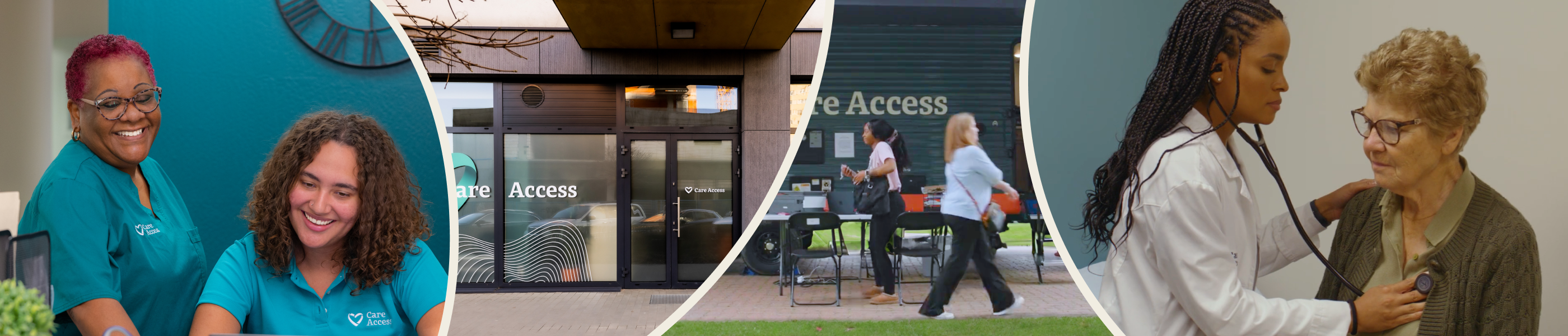
Care Access is working to make the future of health better for all. With hundreds of research locations, mobile clinics, and clinicians across the globe, we bring world-class research and health services directly to communities that often face barriers to care. We are dedicated to ensuring that every person has the opportunity to understand their health, access the care they need, and contribute to the medical breakthroughs of tomorrow.
With programs like Future of Medicine, which makes advanced health screenings and research opportunities accessible to communities worldwide, and Difference Makers, which supports local leaders to expand their community health and wellbeing efforts, we put people at the heart of medical progress. Through partnerships, technology, and perseverance, we are reimagining how clinical research and health services reach the world. Together, we are building a future of health that is better and more accessible for all.
To learn more about Care Access, visit www.CareAccess.com.
How This Role Makes a Difference
The Source Document Specialist is responsible for ensuring accurate, compliant, and efficient clinical trial documentation. This role translates complex study protocols into clear, structured source documents that support high‑quality data collection and regulatory compliance. Serving as a key partner to site staff and study teams, the Specialist manages version control, improves documentation workflows, and safeguards data integrity.
How You'll Make An Impact
- Review and validate source documents (eSource and paper) to ensure completeness, accuracy, and alignment with study protocols, while ensuring compliance with GCP, 21 CFR Part 11, and internal SOPs.
- Review protocol amendments and other study changes to assess impact on source documents, communicate required updates to the source team, and submit revisions as needed.
- Coordinating with source creators, site staff and internal teams for feedback and approval.
- Manage daily communication with site staff, study teams, and internal departments regarding source document updates, requests, and training support.
- Support quarterly initiatives, including process improvements, training development, and workflow optimizations for source documentation
- Participate in cross-functional meetings to provide input on study start-up timelines, protocol changes, and documentation impact analysis.
- Conduct internal audits and quality checks to ensure adherence to documentation standards and regulatory compliance
- Provide feedback to help update standardized templates and checklists to improve the efficiency of source document review.
The Expertise Required
- The Source Document Specialist must demonstrate a strong understanding of clinical trial protocols, GCP, and applicable regulatory requirements, including 21 CFR Part 11, to ensure compliant source documentation. Prior experience in clinical trials—particularly in a Clinical Research Coordinator (CRC) or Quality Assurance (QA) or similar role—is preferred and provides valuable insight into study workflows and data collection needs.
- The role requires proficiency in Microsoft Excel, Word, Outlook, Teams, and SharePoint, along with the ability and willingness to work within eSource platforms such as CRIO. Strong attention to detail is essential to identify discrepancies, manage version control, and ensure accuracy and traceability of source documentation.
- Successful candidates will demonstrate excellent organizational skills, the ability to prioritize tasks in a fast‑paced environment, and effective communication skills for collaborating with site staff, study teams, and regulatory stakeholders. Strong analytical and problem-solving skills, with the ability to interpret complex study requirements are critical to success in this role. A solution‑oriented mindset and the ability to assess and improve documentation workflows are equally important. The position requires comfort working both independently and as part of a global team, managing multiple systems, and adapting to evolving research and technology needs.
- Fluency in English (reading, writing, and speaking) is required to communicate effectively with the global Source team and to review English‑language protocols, manuals, and regulatory documentation.
Certifications/Licenses, Education, and Experience
- Minimum Education:
- Bachelor’s degree in a health-related field (e.g., Life Sciences, Nursing, Public Health, or a related discipline) preferred. Equivalent work experience in clinical research may be considered.
- Minimum Experience:
- Minimum of 2 years of experience in clinical research, with preferred experience as a Clinical Research Coordinator (CRC) or in a role involving source documentation, study execution, or regulatory compliance.
- Strong knowledge of clinical trial operations, including protocol interpretation, source creation, and site workflow processes.
- Experience working with Good Clinical Practice (GCP) guidelines, 21 CFR Part 11 compliance, and clinical trial documentation standards.
- Microsoft Excel, Word, SharePoint, and other digital documentation tools.
- Certified Clinical Research Coordinator (CCRC) – from ACRP (Association of Clinical Research Professionals)
- Certified Clinical Research Professional (CCRP) – from SOCRA (Society of Clinical Research Associates)
- Good Clinical Practice (GCP) Certification – required or obtained upon hire.
How We Work Together
- Location: Remote within the United States. This role requires 100% of work to be performed in a remote office environment.
- Travel: This is a remote position with less than 10% travel requirements. Occasional planned travel may be required as part of the role.
- Physical demands associated with this position Include: The ability to use keyboards and other computer equipment.
The expected pay range for this role is $30.00 - $35.00 USD per hour for full time team members.
Benefits & Perks (US Full Time Employees)
- Paid Time Off (PTO) and Company Paid Holidays
- 100% Employer paid medical, dental, and vision insurance plan options
- Health Savings Account and Flexible Spending Accounts
- Bi-weekly HSA employer contribution
- Company paid Short-Term Disability and Long-Term Disability
- 401(k) Retirement Plan, with Company Match
#LI-Remote
Diversity & Inclusion
We work with and serve people from diverse cultures and communities around the world. We are stronger and better when we build a team representing the communities we support. We maintain an inclusive culture where people from a broad range of backgrounds feel valued and respected as they contribute to our mission.
We are an equal opportunity employer, and all qualified applicants will receive consideration for employment without regard to, and will not be discriminated against on the basis of, race, color, religion, sex, sexual orientation, gender identity or expression, pregnancy, age, national origin, disability status, genetic information, protected veteran status, or any other characteristic protected by law.
Care Access is unable to sponsor work visas at this time.
If you need an accommodation to apply for a role with Care Access, please reach out to: TalentAcquisition@careaccess.com
Mandatory Employer Disclosures:
Notice to Illinois applicants: Applicants are not obligated to disclose expunged juvenile records or adjudication, arrest, or conviction.
Notice to Connecticut applicants: Care Access may require applicants to submit to a urinalysis drug test in connection with an application for employment.
Notice to Arizona, Georgia, Indiana, and North Dakota applicants: Care Access complies with applicable laws prohibiting smoking in and around places of employment.
Notice to Massachusetts applicants: It is unlawful in Massachusetts to require or administer a lie detector test as a condition of employment or continued employment. An employer who violates this law shall be subject to criminal penalties and civil liability.
Notice to Rhode Island applicants: Care Access complies with Rhode Island law prohibiting smoking in enclosed areas within places of employment. Care Access is also subject to is subject to Chapters 29–38 of Title 28 of the Rhode Island General Laws.
Notice to Maryland applicants: UNDER MARYLAND LAW, AN EMPLOYER MAY NOT REQUIRE OR DEMAND, AS A CONDITION OF EMPLOYMENT, PROSPECTIVE EMPLOYMENT, OR CONTINUED EMPLOYMENT, THAT AN INDIVIDUAL SUBMIT TO OR TAKE A LIE DETECTOR OR SIMILAR TEST. AN EMPLOYER WHO VIOLATES THIS LAW IS GUILTY OF A MISDEMEANOR AND SUBJECT TO A FINE NOT EXCEEDING $100.
Create a Job Alert
Interested in building your career at Care Access? Get future opportunities sent straight to your email.
Apply for this job
*
indicates a required field