Senior Mechanical Engineer, Interceptor
Who We Are
GITAI is a vertically integrated space and defense company building the next generation of hardware for low-Earth-orbit missions.
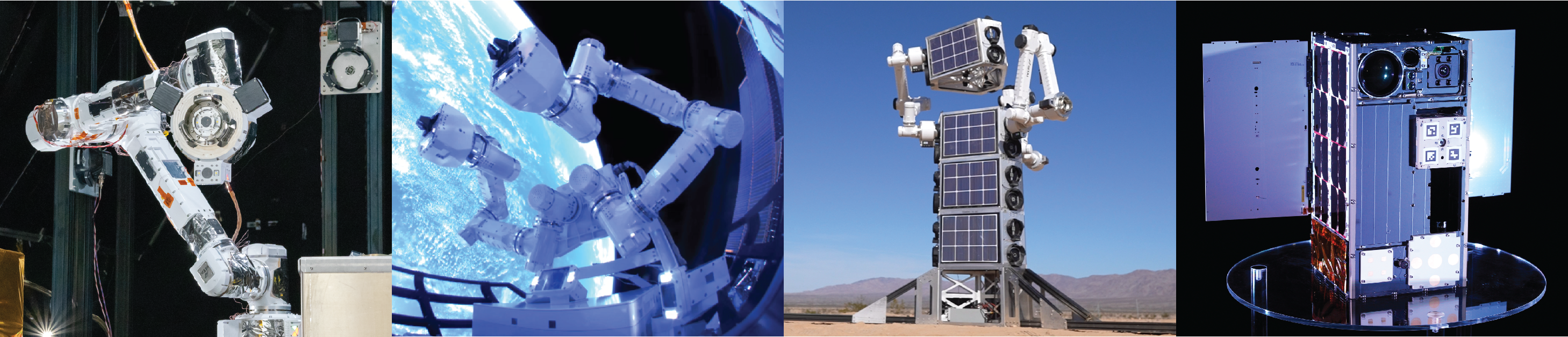
At our core is the space robotics technology that has defined GITAI from the beginning. A small, highly capable engineering team applies that foundation across satellite buses, in-orbit servicing robotics, and mission hardware for applications such as Earth observation. Today, a major focus of our work is supporting U.S. national security missions, particularly through proliferated LEO satellite constellations and other next-generation space systems.
We design, build, integrate, and test much of our hardware in-house. Electrical, mechanical, software, manufacturing, integration, and test teams work closely together, allowing a small team to own complete systems rather than isolated components. This vertical integration helps us move quickly, learn directly from hardware, and shorten the path from architecture to a working system.
We are still early. The systems, the company, and the market are all being built at the same time. Requirements change, technical problems are often ambiguous, and many answers do not yet exist. We are looking for exceptional engineers and operators who want broad ownership, can work across disciplines, and are willing to stay close to the hardware until the mission succeeds.
Your Mission
Lead the mechanical development of interceptor hardware from early architecture through prototype manufacturing, integration, field testing, and redesign.
You will own complex mechanical systems across vehicle structures, propulsion interfaces, avionics packaging, internal mechanisms, test hardware, and ground-support equipment. You will make critical design decisions, resolve cross-functional problems, and help the broader engineering team move faster through strong technical judgment and direct hands-on execution. This is a senior individual-contributor role. You do not need to be a people manager, but you will be expected to provide technical direction, review the work of other engineers, raise the quality of mechanical design, and step into difficult hardware problems when the team is blocked. This is not an analysis-heavy or propulsion-performance position. You will perform and review the calculations needed to support sound decisions, but the work remains grounded in hardware. Designs must be manufacturable, assemble correctly, survive their expected environment, and be ready for the next test.
What You’ll Drive
- Own the mechanical architecture and detailed design of interceptor hardware, including primary and secondary structures, motor mounts and interfaces, avionics packaging, internal mechanisms, enclosures, test fixtures, and ground-support equipment.
- Translate incomplete system requirements, expected loads, environmental conditions, packaging constraints, and subsystem interfaces into practical mechanical designs and clear technical decisions.
- Lead hardware through the full development cycle, including CAD, drawings, design reviews, supplier coordination, fabrication, inspection, assembly, integration, testing, failure investigation, and redesign.
- Provide technical direction and design review to junior and mid-level engineers, improving design quality, manufacturability, documentation, and engineering judgment across the team.
- Work directly with machinists, technicians, suppliers, and engineers to resolve difficult manufacturing, assembly, and integration issues without relying on organizational handoffs.
- Plan and execute structural, environmental, propulsion-related, and vehicle-level tests, including test readiness, field operations, inspection, troubleshooting, repair, and rapid preparation for follow-on testing.
- Lead failure investigations, identify root causes, and drive corrective actions through analysis, physical evidence, design changes, and validation testing.
- Make and communicate clear tradeoffs among mass, strength, stiffness, reliability, manufacturability, cost, schedule, and test risk.
- Establish lightweight technical standards and working methods that improve execution without slowing the pace of development.
- Adapt quickly as program priorities, designs, schedules, suppliers, and test plans change in an early-stage startup environment.
What We’re Looking For
- Bachelor’s degree in Mechanical Engineering, Aerospace Engineering, or a related technical field.
- At least five years of professional experience in rocketry, missiles, launch vehicles, propulsion, or a closely related aerospace field.
- Demonstrated ownership of rocket or missile hardware from design through manufacturing, assembly, and test.
- Strong mechanical design capability, including 3D CAD, production drawings, GD&T, tolerance analysis, material selection, fastening methods, and design for manufacturing and assembly.
- Strong practical understanding of structural mechanics, load paths, vibration, shock, thermal effects, and the calculations required to support and review mechanical designs.
- Experience leading complex hardware development or serving as a technical lead, including reviewing designs and guiding less-experienced engineers.
- Experience working directly with machinists, technicians, fabrication suppliers, and test teams to solve real hardware problems.
- Ability to investigate failures, make sound decisions with incomplete data, and rapidly convert findings into improved hardware.
- Working knowledge of rocket or missile propulsion systems and the mechanical, thermal, and operational constraints they impose on the vehicle.
- Ability to remain effective as priorities, requirements, and schedules change quickly.
- Willingness and ability to spend approximately 50% of your time at remote test sites under demanding field conditions.
- U.S. citizenship is required due to the nature of GITAI’s work with U.S. government customers and programs. This role may require eligibility to obtain and maintain a U.S. government security clearance.
Location & Position Type
- Torrance, CA / Full-time
- This is a full-time onsite role based at GITAI’s office in Torrance, CA. This position requires working onsite five days per week. Remote or hybrid work is not expected for this role.
- This position is expected to spend approximately 50% of its time traveling to or working at test sites, primarily in the Mojave Desert and other locations outside the Los Angeles area.
- Field assignments may involve multi-day stays, early departures, long test days, changing schedules, outdoor work, dust, heat, cold, and occasional evening or weekend work.
Compensation
The annual base salary range for this position is expected to be $155,000 to $200,000. Actual compensation and final level will be determined based on relevant experience, demonstrated mechanical-design capability, hands-on manufacturing and test experience, and other job-related factors. This position is also eligible for stock options and company benefits.
Benefits
- Health Insurance – Platinum medical plan with 100% company-paid medical, dental, and vision coverage for employees; 90% for dependents
- 401(k) Plan – Company match up to 3.5%, with traditional and Roth options
- Equity – Stock option eligibility depending on role
- Relocation Support – Available for qualifying positions
- Time Off – 12 paid holidays per year, 12 days of paid vacation per year, and paid sick leave (in accordance with applicable law)
- Office Perks – Free snacks and drinks, plus regular team events
GITAI does not accept unsolicited resumes from staffing or recruiting agencies. We work only with recruiting partners that have been specifically engaged by GITAI. No fees will be paid for resumes submitted without a prior agreement.
Compensation may include base salary or hourly pay and, depending on the position, equity. Actual compensation will be determined based on experience, skillset, and other job-related factors.
LA salary range
$155,000 - $200,000 USD
Important Notice
- Applicants must be currently authorized to work in the U.S. This role is not eligible for visa sponsorship.
- To conform to U.S. Government space technology export regulations, including the International Traffic in Arms Regulations (ITAR), GITAI Employees must be a U.S. citizen, lawful U.S. permanent resident (i.e., current Green Card holder), or lawfully admitted into the U.S. as a refugee or granted asylum, or be eligible to obtain the required authorizations from the U.S. Department of State and/or the U.S. Department of Commerce, as applicable.
- GITAI USA is an Equal Opportunity Employer. Employment with GITAI USA is governed on the basis of merit, competence and qualifications and will not be influenced in any manner by race, color, religion, gender, national origin/ethnicity, veteran status, disability status, age, sexual orientation, gender identity, marital status, mental or physical disability or any other legally protected status.
Apply for this job
*
indicates a required field