
Flight Test Engineer
Why the Stratosphere?
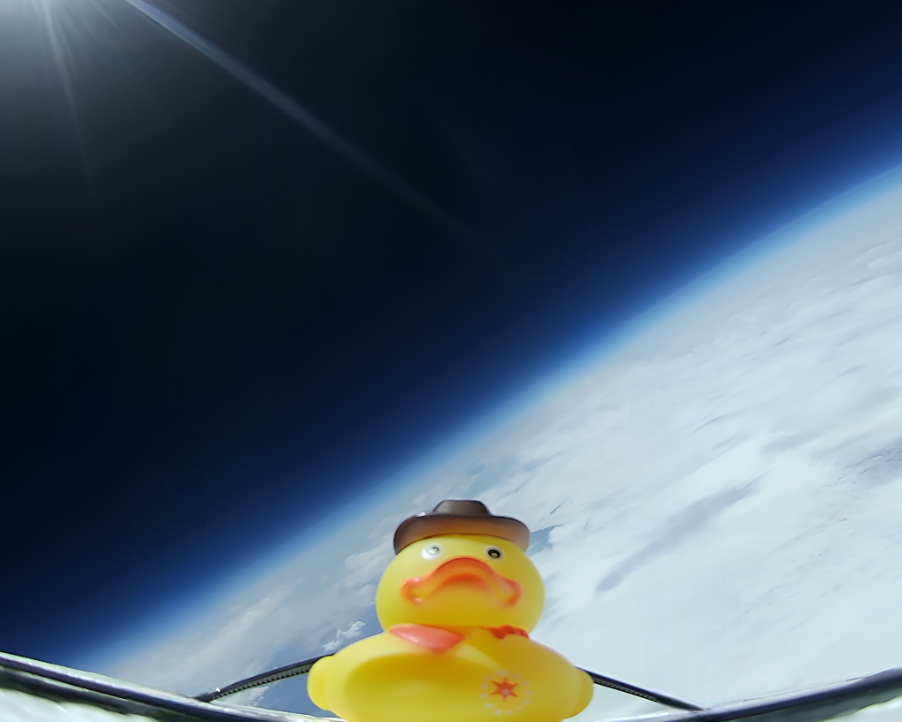
From first principles, it is the obvious place to build. Low-Earth Orbit (LEO) satellites orbit at 400 kilometers, moving at 17,000 mph and offering only brief snapshots. An autonomous solar-powered bird at 20 kilometers, or 65,000 ft, flies steady above the clouds and weather. In other words, it’s very close to Earth. And persistent by flying in circles. Effectively a Cell Tower in the Sky. The Stratosphere provides the physics of permanence. That persistence is priceless. That is Skylink.
Start small. Build upward.
The first product of Icarus is a small, affordable solar-powered Stratospheric bird. A platform designed to be light, simple, and built under constraints. Affordability is the foundation. More importantly, it solves a real use case now. A wedge into the market through intelligence and communications. A beachhead that proves the model, attracts customers who need it so badly they’ll use it even before it’s perfect, and opens the path to market disruption at scale.
The vision: Skylink
The vision goes further than building one plane or even one fleet. The goal is Skylink: a persistent Stratospheric grid delivering continuous intelligence, uninterrupted communications, and global connectivity. A new layer of infrastructure. The next backbone of how we see, sense, and connect the world.
Our mission at Icarus is to re-establish and maintain dominance in the Stratosphere—the Forgotten Frontier. We asked ourselves: what is the fastest and best way to execute this? The answer was not to start with a massive, billion-dollar program. It was to start with affordable birds, scale endurance step by step, and build upward into Skylink.
Mission
Re-establish and maintain dominance in the Stratosphere.
What you’ll do
The Flight Test Engineer makes sure every Icarus flight produces clean, trustworthy engineering data. You build the test cards and criteria, oversee their execution in the field, jump in on parameter changes when the test calls for it, and turn the data into the conclusions that drive the next design. Operations runs the test event. You make sure it tests the right things and that we learn everything we can from it.
Plan the test
- Design flight test campaigns, test cards, and pass/fail criteria from first flight through envelope expansion.
- Define what we measure: instrumentation, sensors, data acquisition, and telemetry requirements.
- Write test plans and hazard analyses, and contribute to flight safety documentation.
- Translate engineering questions into test points that can effectively find an answer.
Oversee the test
- Oversee execution of test cards and test criteria during test events, making sure each point is flown and captured correctly.
- Monitor aircraft behavior and data in real time against the test criteria.
- Recommend and make parameter changes when the test calls for it, in coordination with the test director and flight crew.
- Capture the conditions, configuration, and events of every flight with precision.
Turn data into answers
- Own the data: build and maintain the pipeline and tooling that turn raw flights into clean, usable engineering data.
- Analyze flight data and telemetry to characterize aircraft performance, stability, loads, and systems behavior.
- Run root cause analysis on anomalies and failures and drive them to resolution.
- Write quick-look and formal test reports that engineering trusts and acts on.
- Compare flight results against models and predictions and close the loop with the design teams.
Improve the test program
- Continuously improve the tools, processes, and standards that make Icarus flight test fast, safe, and repeatable.
- Travel to remote test sites and work in heat, cold, wind, and dust for long days on short notice.
What we’re looking for
- Bachelor's or graduate degree in aerospace, mechanical, electrical, or a related engineering discipline.
- Experience in flight test, developmental test and evaluation, or a closely related discipline.
- Demonstrated experience planning and executing flight test, ideally including first-flight or build-up test programs.
- Familiarity with flight test fundamentals, ideally fixed-wing: test card design, envelope expansion, and test criteria.
- Strong data analysis skills: you can turn large, messy flight data sets into clear engineering conclusions.
- Proficiency in MATLAB, Python, or similar for data analysis, signal processing, and scripting.
- Strong Linux command line skills for debugging and troubleshooting.
- Working knowledge of instrumentation, telemetry, and data acquisition.
- Calm, decisive judgment under pressure, especially when jumping in on parameters with an aircraft in the air.
- Willingness to travel to remote test sites.
- Strong communicator, non-negotiable.
- High trust, extreme ownership, no ego.
Bonus
- Experience as a test director or test conductor, running test events and directing the flight crew.
- FAA Part 107 Remote Pilot Certificate or experience operating unmanned aircraft.
- Background building RC or UAS aircraft (SAE Aero, Design Build Fly, or serious hobbyist).
- Experience working within a flight test program at an early-stage company.
Why Icarus
- Meaningful equity
- Top market salary and bonuses
- Health, dental, and vision insurance
- Factory in El Segundo
- Real ownership, real hardware, real flight
- Small team, massive responsibility
- High signal (engineering) to noise (management) culture
- Dream desk setup
- Daily lunch
- Unlimited celsius
This is not a normal flight test job
- We are pioneers, not corporate managers. Icarus deliberately optimizes for a high signal (engineers) to noise (management) ratio, where engineering, flight, and execution matter more than process, politics, or management overhead.
- You will work side by side with the engineers who designed the aircraft and the operators who fly it. You will own the test cards and the data end to end. Plan it. Watch it fly. Analyze it. Tell us what to change. Then prove it on the next flight.
- We expect full extreme ownership. This is a high-trust, no-BS team, and everyone pulls their weight, especially in the field.
- We want engineers in the field, not behind a desk waiting for someone else's data. No theoretical test programs. No flights that do not teach us something. Just real aircraft, real envelopes, and real data.
- You must thrive under pressure, learn fast, and produce in the field. We move fast. We go to Mojave at 4 am in the morning. We expect results and an obsession with quality and speed.
- You will be the person who proves our aircraft can do what we say it can. If you want to own the test program that takes an aircraft to 60,000 ft for the first time, this is it.
No tourists. No bystanders. Only builders.
Hiring process
- Phone screen with the hiring manager
- Onsite presentation and panel Q&A, including a flight test problem
- Reference checks
US salary range
$125,000 - $185,000 USD
The salary range for this role is an estimate based on a wide range of compensation factors, inclusive of base salary only. Actual salary may vary based on (but not limited to) work experience, education and/or training, critical skills, and/or business considerations. Highly competitive equity grants are considered part of Icarus' total compensation package.
We’re an equal opportunity employer. We welcome all applicants without attention to race, color, religion, sex, sexual orientation, gender identity, national origin, veteran or disability status.
Create a Job Alert
Interested in building your career at Icarus? Get future opportunities sent straight to your email.
Apply for this job
*
indicates a required field