
Flight Operations Generalist
Why the Stratosphere?
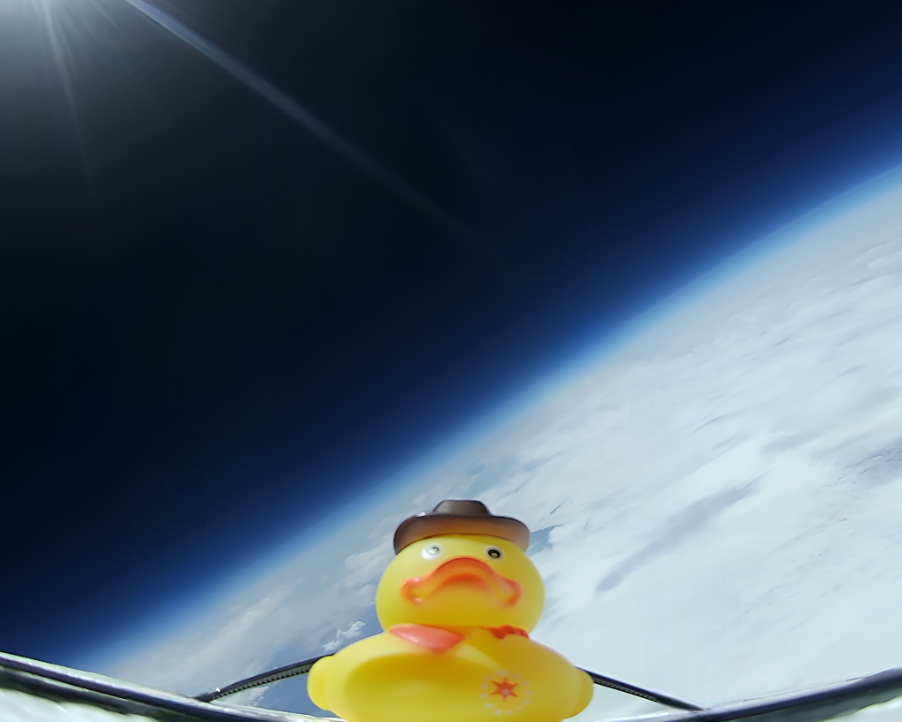
From first principles, it is the obvious place to build. Low-Earth Orbit (LEO) satellites orbit at 400 kilometers, moving at 17,000 mph and offering only brief snapshots. An autonomous solar-powered bird at 20 kilometers, or 65,000 ft, flies steady above the clouds and weather. In other words, it’s very close to Earth. And persistent by flying in circles. Effectively a Cell Tower in the Sky. The Stratosphere provides the physics of permanence. That persistence is priceless. That is Skylink.
Start small. Build upward.
The first product of Icarus is a small, affordable solar-powered Stratospheric bird. A platform designed to be light, simple, and built under constraints. Affordability is the foundation. More importantly, it solves a real use case now. A wedge into the market through intelligence and communications. A beachhead that proves the model, attracts customers who need it so badly they’ll use it even before it’s perfect, and opens the path to market disruption at scale.
The vision: Skylink
The vision goes further than building one plane or even one fleet. The goal is Skylink: a persistent Stratospheric grid delivering continuous intelligence, uninterrupted communications, and global connectivity. A new layer of infrastructure. The next backbone of how we see, sense, and connect the world.
Our mission at Icarus is to re-establish and maintain dominance in the Stratosphere—the Forgotten Frontier. We asked ourselves: what is the fastest and best way to execute this? The answer was not to start with a massive, billion-dollar program. It was to start with affordable birds, scale endurance step by step, and build upward into Skylink.
Mission
Re-establish and maintain dominance in the Stratosphere.
What you’ll do
The Flight Operations Generalist is the person who takes our aircraft from the hangar to the sky and back. You set up the test site, prepare the aircraft, run preflight, operate it in flight, and troubleshoot whatever comes up, all under the direction of our engineers. When Icarus goes to the field, you are the center of the operation.
Set up the site and the aircraft
- Stand up the test site: ground control station, comms, power, ground support equipment, and safety setup.
- Assemble, configure, and prepare aircraft for flight, including mechanical, electrical, and payload setup.
- Run preflight inspections and checklists, and own aircraft readiness.
- Configure and verify the ground control station, telemetry links, and mission plan before every flight.
- Act as connective tissue between engineers and the products they've built as they fly.
Fly
- Operate the aircraft in flight from the ground control station, executing the test plan under the direction of engineers.
- Monitor telemetry and aircraft health in real time and respond to anomalies in the moment.
- Act as the calm, decisive voice on the sticks when something goes wrong in the air.
- Run launch and recovery, including any non-traditional takeoff and landing configurations.
Troubleshoot and turn around
- Diagnose and fix mechanical, electrical, and software issues in the field to keep the test campaign moving.
- Refurbish and reset the aircraft between flights and prepare it for the next sortie.
- Capture flight logs, write up what happened, and feed it back to engineering to drive the next iteration.
- Maintain positive control of tools and hardware to keep the aircraft safe.
In the field
- Build and improve the standard operating procedures that make our flight operations repeatable and safe.
- Solve novel problems without hesitation.
What we’re looking for
- 3+ years of hands-on UAS, RC, or aircraft operations experience, or equivalent military experience as a UAV operator, maintainer, or crew chief.
- Demonstrated ability to set up, preflight, operate, and recover an unmanned aircraft.
- Strong hands-on troubleshooting across mechanical, electrical, and software systems.
- Comfort with ground control station software.
- Familiarity with the Linux command line for debugging and troubleshooting.
- Calm, decisive judgment under pressure, especially with an aircraft in the air.
- Comfort taking direction from engineers and translating it into safe flight operations.
- Willingness to travel to remote test sites and work long, physical days outdoors.
- Strong communicator, non-negotiable.
- High trust, extreme ownership, no ego.
Bonus
- FAA Part 107 Remote Pilot Certificate.
- Experience with developmental flight test, first-flight events, or build-up test programs.
- Background building RC or UAS aircraft (SAE Aero, Design Build Fly, or serious hobbyist).
- FAA Airframe and Powerplant license or military aviation maintenance background.
- Experience operating in austere or remote field environments.
- Aviation-adjacent military specialty with "air sense" (JTAC, CCT, etc).
Why Icarus
- Meaningful equity
- Top market salary and bonuses
- Health, dental, and vision insurance
- Factory in El Segundo
- Real ownership, real hardware, real flight
- Small team, massive responsibility
- High signal (engineering) to noise (management) culture
- Dream desk setup
- Daily lunch
- Unlimited celsius
This is not a normal flight ops job
- We are pioneers, not corporate managers. Icarus deliberately optimizes for a high signal (engineers) to noise (management) ratio, where engineering, flight, and execution matter more than process, politics, or management overhead.
- You will work side by side with engineers, not behind a wall from them. You will own the aircraft in the field end to end. Set it up. Preflight it. Fly it. Fix it. Fly it again.
- We expect full extreme ownership. This is a high-trust, no-BS team, and everyone pulls their weight, especially in the field.
- We want operators, not bystanders. No simulators standing in for the real thing. No watching others fly. Just real aircraft, real test sites, and real flight.
- You must thrive under pressure, learn fast, and produce in the field. We move fast. We go to Mojave at 4 am in the morning. We expect results and an obsession with quality and speed.
- You will be the person who puts our aircraft in the sky. If you want to be on the sticks when the thing you prepared climbs to 60,000 ft, this is it.
No tourists. No bystanders. Only builders.
Hiring process
- Phone screen with the hiring manager
- Onsite presentation and panel Q&A, including hands-on operations and troubleshooting assessment
- Reference checks
US salary range
$90,000 - $160,000 USD
The salary range for this role is an estimate based on a wide range of compensation factors, inclusive of base salary only. Actual salary may vary based on (but not limited to) work experience, education and/or training, critical skills, and/or business considerations. Highly competitive equity grants are considered part of Icarus' total compensation package.
We’re an equal opportunity employer. We welcome all applicants without attention to race, color, religion, sex, sexual orientation, gender identity, national origin, veteran or disability status.
Create a Job Alert
Interested in building your career at Icarus? Get future opportunities sent straight to your email.
Apply for this job
*
indicates a required field