
Flight Operations Crew Chief
Why the Stratosphere?
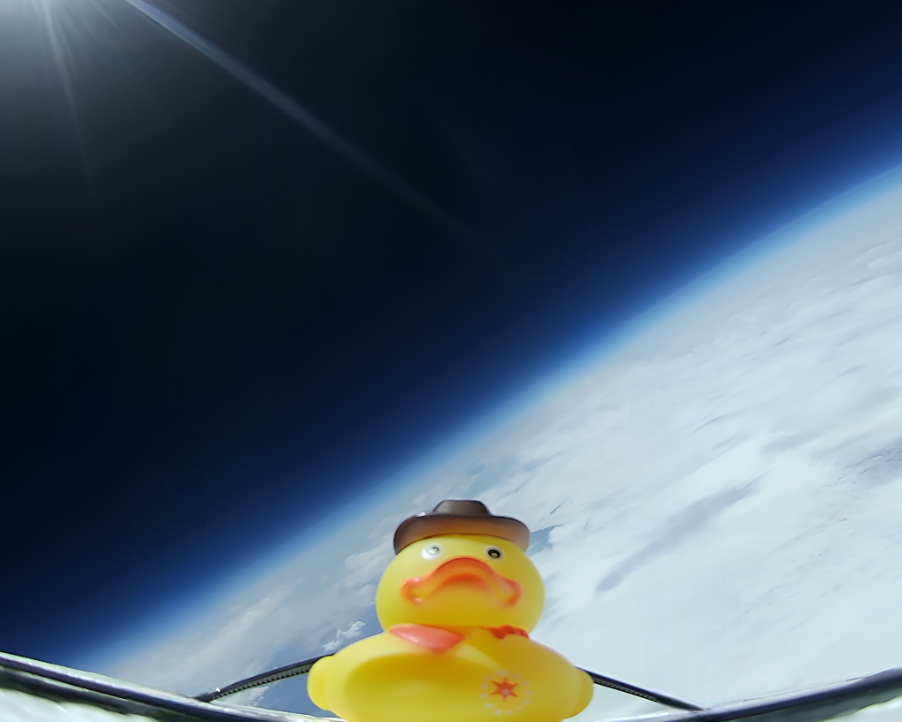
From first principles, it is the obvious place to build. Low-Earth Orbit (LEO) satellites orbit at 400 kilometers, moving at 17,000 mph and offering only brief snapshots. An autonomous solar-powered bird at 20 kilometers, or 65,000 ft, flies steady above the clouds and weather. In other words, it’s very close to Earth. And persistent by flying in circles. Effectively a Cell Tower in the Sky. The Stratosphere provides the physics of permanence. That persistence is priceless. That is Skylink.
Start small. Build upward.
The first product of Icarus is a small, affordable solar-powered Stratospheric bird. A platform designed to be light, simple, and built under constraints. Affordability is the foundation. More importantly, it solves a real use case now. A wedge into the market through intelligence and communications. A beachhead that proves the model, attracts customers who need it so badly they’ll use it even before it’s perfect, and opens the path to market disruption at scale.
The vision: Skylink
The vision goes further than building one plane or even one fleet. The goal is Skylink: a persistent Stratospheric grid delivering continuous intelligence, uninterrupted communications, and global connectivity. A new layer of infrastructure. The next backbone of how we see, sense, and connect the world.
Our mission at Icarus is to re-establish and maintain dominance in the Stratosphere. We asked ourselves: what is the fastest and best way to execute this? The answer was not to start with a massive, billion-dollar program. It was to start with affordable birds, scale endurance step by step, and build upward into Skylink.
Icarus was founded on the belief that the Stratosphere is the Forgotten Frontier and that reclaiming it will define the next era of aerospace and what is possible from the sky. We build solar-powered aircraft that fly at 60,000 ft for weeks at a time, delivering persistent, affordable, and scalable presence from this layer of the atmosphere.
The Flight Operations Crew Chief owns aircraft readiness. You assemble, prepare, inspect, and maintain our aircraft so they are safe and ready every time they go to the line. You are the person the team trusts to say the aircraft is ready to fly. When something is wrong with the airframe, you are the one who finds it and fixes it.
Mission
Re-establish and maintain dominance in the Stratosphere.
What you’ll do
Prepare the aircraft
- Assemble, configure, and prepare aircraft for flight, including mechanical assembly, avionics connections, and payload setup.
- Run preflight inspections and checklists, and make the call on aircraft readiness.
- Set up and verify ground support equipment, power, and the physical test site.
- Own the configuration and condition of the aircraft from the hangar to the line.
Maintain and troubleshoot
- Diagnose and fix mechanical, electrical, and software issues on the aircraft in the field and in the hangar.
- Perform scheduled and unscheduled maintenance, repairs, and replacements.
- Refurbish and reset the aircraft between flights and prepare it for the next sortie.
- Maintain positive control of tools and hardware to keep the aircraft safe.
- Follow directions and intent from engineering personnel to make required adjustments on the fly.
Document and improve
- Keep accurate maintenance records, squawks, and configuration logs.
- Feed findings back to engineering to drive the next iteration of the aircraft.
- Build and improve the standard operating procedures that make aircraft readiness repeatable and safe.
What we’re looking for
- 3+ years of hands-on aircraft, UAS, or RC maintenance experience, or equivalent military experience as a maintainer or crew chief.
- Holds or willing to quickly obtain FAA Part 107 certification.
- Demonstrated ability to assemble, inspect, maintain, and sign off on an aircraft's readiness.
- Strong hands-on troubleshooting across mechanical, electrical, and software systems.
- Disciplined approach to checklists, documentation, and configuration control.
- Sound judgment on airworthiness and a willingness to ground an aircraft that is not ready.
- Comfort taking direction from engineers and translating it into a flight-ready aircraft.
- Willingness to travel frequently to remote test sites across the world.
- Strong communicator, non-negotiable.
- High trust, extreme ownership, no ego.
Bonus
- FAA Airframe and Powerplant license or military aviation maintenance background.
- Familiarity with the Linux command line for debugging and troubleshooting.
- Experience with developmental flight test or build-up test programs.
- Background building RC or UAS aircraft (SAE Aero, Design Build Fly, or serious hobbyist).
- Aviation-adjacent military specialty with "air sense" (JTAC, CCT, etc).
- Experience operating in austere or remote field environments.
Why Icarus
- Meaningful equity
- Top market salary and bonuses
- Health, dental, and vision insurance
- Factory in El Segundo
- Real ownership, real hardware, real flight
- Small team, massive responsibility
- High signal (engineering) to noise (management) culture
- Dream desk setup
- Daily lunch
- Unlimited celsius
This is not a normal flight ops job
- We are pioneers, not corporate managers. Icarus deliberately optimizes for a high signal (engineers) to noise (management) ratio, where engineering, flight, and execution matter more than process, politics, or management overhead.
- You will work side by side with engineers, not behind a wall from them. You will own aircraft readiness end to end. Build it up. Inspect it. Fix it. Hand it off ready to fly.
- We expect full extreme ownership. This is a high-trust, no-BS team, and everyone pulls their weight, especially in the field.
- We want operators, not bystanders. No fake projects. No watching others work. Just real aircraft, real test sites, and real flight.
- You must thrive under pressure, learn fast, and produce in the field. We move fast. We go to Mojave at 4 am in the morning. We expect results and an obsession with quality and speed.
- You will be the person the team trusts to say the aircraft is ready. If you want the thing you prepared to climb to 60,000 ft and come home, this is it.
No tourists. No bystanders. Only builders.
Hiring process
- Phone screen with the hiring manager via Microsoft Teams
- Onsite presentation and panel Q&A, including hands-on readiness and troubleshooting assessment
US salary range
$90,000 - $150,000 USD
The salary range for this role is an estimate based on a wide range of compensation factors, inclusive of base salary only. Actual salary may vary based on (but not limited to) work experience, education and/or training, critical skills, and/or business considerations. Highly competitive equity grants are considered part of Icarus' total compensation package.
We’re an equal opportunity employer. We welcome all applicants without attention to race, color, religion, sex, sexual orientation, gender identity, national origin, veteran or disability status.
Create a Job Alert
Interested in building your career at Icarus? Get future opportunities sent straight to your email.
Apply for this job
*
indicates a required field