
AI-Native Electrical Engineer, PCB Design
Who we are
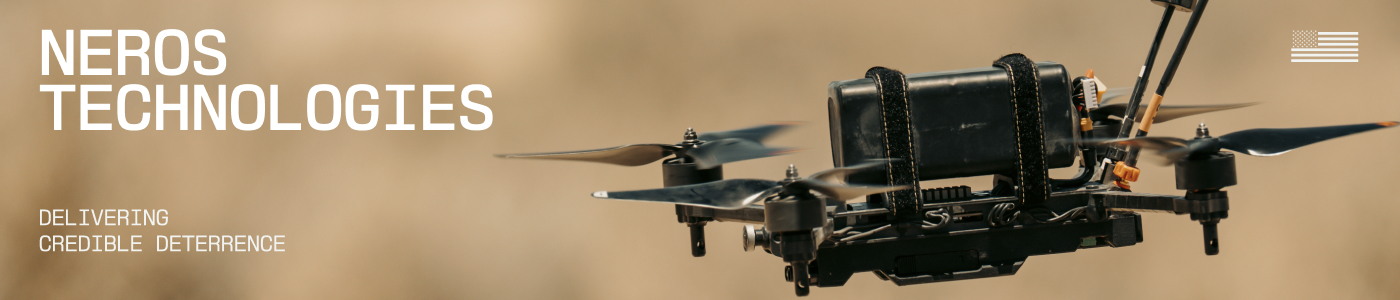
Neros is a defense technology company rebuilding America’s drone industrial base. We design and manufacture high-performance unmanned systems that are tested in combat, iterated at startup speed, and built at massive scale. Our team culture is fast, hands-on, and obsessed with closing the gap between design and deployment.
As drones transform the character of warfare, Neros is delivering the systems the West needs to compete on the modern battlefield and deter the adversaries of democracy. We’re hiring engineers, operators, and builders who want to move fast, take on extreme ownership, and get capability into the hands of warfighters in months, not years.
What you will be doing
Neros designs the core electronics on its drones in-house: flight controllers, ESCs, radios, video transmitters, and autonomy compute. As an AI-Native Electrical Engineer reporting to the Director of Electrical Engineering, you will build and own the AI system that designs, validates, and releases that hardware: a versioned part and circuit library backed by live component data, agents that design from it, automated reviews, and release packages and BOMs that flow straight into our PLM. The goal is a design flow where our engineers write the requirements and approve the result, and the work in between is automated. If you have designed a board and built something real with AI, apply even if you do not match every line below.
Responsibilities
- Build agents that turn a spec into a routed board. They draft schematics from library parts and reusable circuit blocks, then place, route, and generate outputs through ECAD tool APIs and MCP servers.
- Build automated design reviews and SPICE, PDN, and SI checks that run on every commit. Measure catch rate and cost against past Neros designs with known bugs.
- Build the framework and agents that generate symbols, footprints, and 3D models from datasheets, check them against IPC-7351 and our internal standards, and release them as versioned packages in Git.
- Build the tooling that proposes second sources and flags EOL and PCN notices against every active BOM, using lifecycle and compliance data from SiliconExpert and similar sources.
- Build the release pipeline that turns a signed-off design into fabrication and assembly packages and a BOM in Siemens Teamcenter.
You should have the following
- BS or MS in Electrical or Computer Engineering, or equivalent hands-on experience. New graduates are encouraged to apply.
- At least one PCB you designed that was fabricated, assembled, and brought up, whether in a class, on a student team, at work, or on your own.
- Solid circuit fundamentals, including component selection and derating, power supply design, decoupling, and basic signal integrity.
- Hands-on experience with an ECAD tool such as Altium Designer, KiCad, or Cadence, including creating your own symbols and footprints.
- Proficiency in Python, Git, and the command line, including pull requests and code review.
- Experience with REST APIs and structured data such as JSON and SQL.
- Experience building with LLMs beyond chat: tool calling, agents, MCP servers, evals, or software shipped with AI coding tools such as Claude Code or Cursor.
- A portfolio, GitHub, or project write-up that shows something you built.
- Ability to work onsite at our Torrance headquarters, and eligibility to work with export-controlled technical data as a U.S. person
Nice to Have
- Code-first hardware design tools such as atopile, SKiDL, JITX, or Zener, or scripting against the KiCad or Altium APIs.
- Built or maintained a component library or reusable circuit blocks that other engineers depended on, including extracting structured data from datasheets.
- Component engineering or PLM experience: lifecycle and compliance data, ECOs, and tools such as SiliconExpert, Octopart, or Teamcenter, including their APIs.
- Semantic versioning, dependency pinning, and hardware CI with tools like KiBot or GitHub Actions.
- Automated SPICE simulation, or field-solver based impedance and SI/PI analysis.
- RF, high-speed digital, or flex circuit layout, plus working knowledge of DFM/DFA/DFT and IPC-2221 and IPC-7351.
- Drone, robotics, rocketry, CubeSat, or FPV projects.
US Salary Range
$136,500 – $191,500 USD
The salary range for this role is an estimate based on a wide range of compensation factors, inclusive of base salary only. Actual salary may vary based on (but not limited to) work experience, education and/or training, critical skills, and/or business considerations. Highly competitive equity grants are considered part of Neros' total compensation package.
We’re an equal opportunity employer. We welcome all applicants without attention to race, color, religion, sex, sexual orientation, gender identity, national origin, veteran or disability status.
Create a Job Alert
Interested in building your career at Neros Technologies? Get future opportunities sent straight to your email.
Apply for this job
*
indicates a required field