
Computational Engineer
About the Company
We are a renewable energy and ocean technology company committed to rapidly developing and deploying technologies that will ensure a sustainable future for Earth by unlocking the vast energy potential of its oceans. Our focus is on capturing civilizational levels of ultra-low-cost renewable energy for applications including computing and affordable renewable fuels delivered to shore.
The company is a public benefit corporation headquartered in Portland, Oregon, and backed by leading venture capitalists, philanthropic investors, university endowments, and private investment offices. We operate as an idea meritocracy in which the best ideas change the company’s direction on a regular basis.
Our staff have worked at organizations such as SpaceX, Blue Origin, Boeing, Tesla, Apple, Virgin Orbit, Astra, Google, Amazon, Microsoft, New Relic, Bridgewater, Raytheon, Disney Imagineering, and the US Army and Air Force, as well as research universities, startups, and small companies across a range of industries.
About the Job
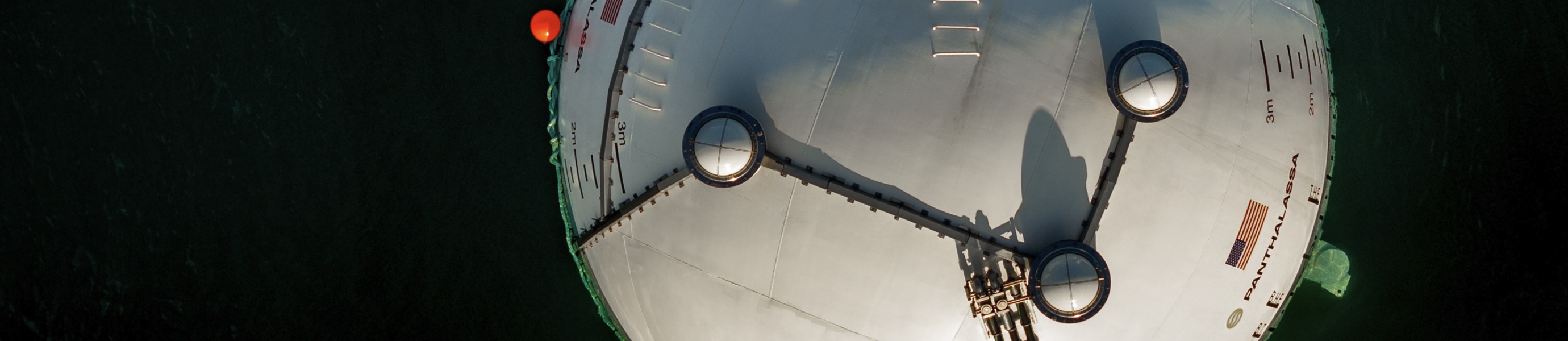
Our core technology is the node, a device that produces energy in the ocean’s harshest conditions for years at a time without human maintenance or intervention.
As a Computational Engineer, you will work with our in-house Python automation tools to run computational fluid dynamics (CFD) simulations from geometry to report: meshing, case setup, solving on HPC systems, and post-processing. Our fast-running reduced-order models (ROMs) are used to explore and optimize marine system designs, and the CFD automation tools are how we check their predictions against high-fidelity simulation. Your job will be to make that check faster, more reliable, and easier to trust.
You will work in Python every day: running verification cases, finding out why a simulation failed or a result looks wrong, and turning what you learn into better defaults, templates, and automated checks. You will implement the team’s CFD best practices in the workflow so that every run follows them without extra manual effort. You will also improve how CFD and ROM results are compared, so that agreement and disagreement are measured consistently and reported clearly. You will work closely with senior CFD engineers, who will set technical direction, review your work, and help with the hardest problems. You will also have cross-team collaborations with the engineers who develop the ROMs.
This is an early-career role. The ideal candidate has a solid foundation in fluid mechanics, hands-on CFD experience from coursework, research, internships, or industry, and a strong interest in scripting and automation. We are looking for someone who is careful with details, curious about why a simulation gives the answer it does, and motivated to write code that removes manual steps.
Candidates should have strong interpersonal skills and be able to thrive in a creative, scrappy, and collaborative environment in which the best ideas change the company’s direction on a regular basis.
Responsibilities
- Run CFD simulations through our in-house Python automation tools using Helyx, OpenFOAM, and Star-CCM+, from geometry preparation and meshing through solver setup, execution, post-processing, and reporting.
- Verify ROM predictions against high-fidelity CFD for optimized geometries and operating conditions, and report clearly where the two agree, where they differ, and by how much.
- Improve the verification process itself: help define consistent comparison metrics and acceptance criteria, automate the CFD-to-ROM comparison plots and reports, and extend the range of cases that can be verified automatically.
- Implement the team’s CFD best practices using templates in the Python automation tooling, including meshing guidelines, solver settings, convergence criteria, and result quality checks, so that they are applied by default on every run.
- Refine the automation workflows by removing manual steps and handoffs, making failures easier to detect and diagnose, adding tests, and reducing the time and cost of each simulation.
- Diagnose failed or suspect simulations, including meshing failures, convergence issues, boundary condition problems, and numerical instability, with support from senior engineers, and feed the fixes back into the workflow.
- Run grid convergence and sensitivity studies on canonical cases and internal benchmark problems to quantify the accuracy of each automated workflow.
- Run simulation workflows on on-premises and cloud-based HPC systems.
- Develop clear plots, visualizations, and short technical memos that communicate simulation results, limitations, and open questions.
- Document best practices, templates, and lessons learned so that other engineers can run and extend the workflows.
- Collaborate with the ROM, optimization, mechanical engineering, and CFD teams to understand what they need from verification and to investigate differences between models.
- Write maintainable Python code and contribute it through version control, code review, and automated testing.
- Use modern AI tools effectively to accelerate coding, analysis, documentation, and simulation workflow development while maintaining strong technical judgment and verification discipline.
Required Qualifications
- Legal authorization to work in the United States.
- Bachelor’s degree in Ocean Engineering, Naval Architecture, Mechanical Engineering, Aerospace Engineering, Physics, Applied Mathematics, or a similar field.
- Solid foundation in fluid mechanics, numerical methods, and physics-based modeling.
- Hands-on experience setting up, running, and post-processing CFD simulations through coursework, research, internships, or industry work.
- Experience using at least one CFD tool such as Helyx, OpenFOAM, Star-CCM+, or similar.
- Proficiency in Python for scripting, data processing, and plotting.
- Working knowledge of Linux environments and the command line.
- Understanding of verification and validation fundamentals, including grid convergence, sensitivity studies, and comparison against reference data.
- Ability to use first-principles reasoning to recognize when a simulation result is not physically meaningful, and the persistence to find out why.
- Attention to detail and a habit of checking your own work.
- Strong written and verbal communication skills, including the ability to explain technical results and their limitations clearly.
- Eagerness to learn, to ask for and act on feedback, and to take increasing ownership of your work over time.
Desired Qualifications
- Master’s degree in Ocean Engineering, Naval Architecture, Mechanical Engineering, Aerospace Engineering, Physics, Applied Mathematics, or a similar field.
- 1–3 years of industry or research experience in CFD, marine hydrodynamics, naval architecture, offshore engineering, or related fields.
- Experience with OpenFOAM or Helyx, including meshing, case setup, and running in parallel.
- Experience with free-surface flows, multiphase flows, moving bodies, wave-structure interaction, or other marine CFD applications.
- Experience building or contributing to simulation automation, such as CAD-to-mesh-to-solve-to-post-processing workflows, parameter sweeps, or automated reports.
- Experience with software engineering practices, including Git, code review, automated testing, and continuous integration.
- Experience running simulations on HPC clusters or cloud computing platforms.
- Working knowledge of reduced-order models, BEM, or time-domain simulation, or experience comparing models of different fidelity.
- Experience comparing simulations to experimental or other physical test data.
- Experience with visualization and post-processing tools such as ParaView or PyVista, or with developing dashboards for simulation results.
- Experience using AI coding tools to accelerate engineering or software work.
- Experience in startup environments or fast-paced R&D teams; comfortable with ambiguity, proactive in shaping work, and adaptable to change.
The above qualifications are desired, not required. We encourage you to apply if you are a strong candidate with only some of the desired skills and experience listed.
Additional Requirements
- Travel to vendors and test sites as needed
- Intermittently able to work longer hours and weekends to support milestones, sea trials, fleet operations, or urgent design decisions.. While we expect a lot of each other, we also offer a high degree of autonomy and work-life balance, including flexible PTO and flexible working hours.
- Strong preference for candidates based in Portland, Oregon. Exceptional remote candidates will be considered, with regular travel to Portland expected.
Compensation and Benefits
If hired for this full-time role, you will receive:
- Cash compensation of $95,000 - $135,000.
- Equity in the company. We’re all owners and if we’re successful, this equity should be far and away the most valuable component of your compensation.
- A benefits package that helps you take care of yourself and your family, including:
- Flexible paid time off
- Health insurance (the company pays 100% of gold-level PPO plan for full-time employees, their partners, and dependents)
- Dental insurance (the company pays 100% for full-time employees, their partners, and dependents)
- Vision insurance (the company pays 100% for full-time employees, their partners, and dependents)
- Disability insurance (the company pays 100% for a policy to provide long-term financial support if you become disabled)
- Ability to contribute to tax-advantaged accounts, including 401(k), health FSA, and dependent care FSA
- Relocation assistance to facilitate your move to Portland (if needed).
Location
Our offices, lab, and shop are located in Portland, Oregon. We strongly prefer candidates based in Portland, Oregon, but exceptional remote candidates will be considered with regular travel to our offices, lab, sea-trial sites, or partner facilities.
Create a Job Alert
Interested in building your career at Panthalassa ? Get future opportunities sent straight to your email.
Apply for this job
*
indicates a required field