
Brand & Marketing Designer (AI-Native)
Sandboxx builds consumer technology that supports service members and their families across the full military life cycle. We operate at national scale, work closely with the Department of War and the broader military ecosystem, and serve millions of users each year. We are looking for driven, curious people who take ownership of their work, move quickly, and want to build products that have real impact for the military community.
About Sandboxx
Sandboxx connects the military community, making service members and their supporters more mission-ready than ever. Every week, tens of thousands of recruits send letters that forge unbreakable bonds with the people back home, and those letters pull thousands of new people into our ecosystem. Our brand lives in every one of those letters, every in-app moment, every campaign, and every pixel of our community.
We serve people at the most emotionally charged moments of their lives: a kid shipping to basic, a spouse counting down a deployment, a family at a graduation. Our audience can tell the difference between real support and performed patriotism in about half a second. Getting the feeling right is the entire job. That is also the part no tool can do for us, which is exactly why this role exists.
The honest version of this role
We are hiring one creative owner for the whole brand, and we are hiring at a moment when the craft of design is changing fast.
Let's be clear about what this is: a hybrid. You will still design, with real craft and your own hands. You will also build the AI workflows and systems that let that craft scale across a brand this size. Neither half is going away, and one is not a tax you pay to do the other. It is a new blend of designing and operating, and we want someone genuinely excited by both halves of it.
Here is the trade we are making, out loud: AI can now produce a competent draft of almost anything visual in seconds. What it cannot do is decide what is right for a recruit's mother, hold a brand together across forty touchpoints, or know when a "good enough" asset would quietly cheapen the thing we are known for. We want to spend your judgment on the parts that matter and stop spending it on the parts that don't.
Put plainly, the center of gravity of this job is moving from making to deciding. As execution gets cheap, the premium shifts to judgment: framing the right problem, choosing the direction that is actually strong, and knowing what to refine versus what to kill. Speed matters here, but only speed in the right direction.
In practice, a substantial part of this role is what we're calling AI Design Ops from day one: building and running the systems, prompts, templates, and review loops that let AI handle volume production while you stay the final eye on everything. We expect that share to grow, plausibly toward a third to a half of the work over the next year. We're being straight with you that this is a direction we strongly believe in and are still building, not a finished playbook, and you will help define it. If "I get to architect how a brand uses AI without losing its soul" sounds like the best part of the job rather than the worst, you are who we are looking for.
If it sounds like a downgrade of your craft, we are probably not the right fit, and that's okay.
What only you can do (the human layer)
This is the heart of the role and where most of your judgment goes.
- Own the feeling, not just the file. Decide what is on-brand and what is tone-deaf for a military audience. Be the person who knows when an asset honors the moment versus when it markets at it.
- Be the brand's taste and final eye. Every asset, human-made or AI-assisted, passes your judgment before it ships. You hold the line on quality when speed pressures it.
- Set creative direction with marketing context. Define how new products and campaigns should look and feel, and just as importantly, what they need to do: who the asset is for, where they are in the journey, and what it should make them feel or do at that moment. A top-of-funnel awareness piece and a retargeting nudge to someone who abandoned a cart are not the same job, and knowing the difference stays human. Direction is upstream of production.
- Build and evolve the design system. A living Figma library, components, naming, and guidelines that let a small team punch far above its weight. This is core to the role, not a side project.
- Make complex things feel simple and human. Turn dense military benefits, training timelines, and product features into visuals a stressed-out family actually understands.
- Manage the relationships. Freelancers, merch vendors, print partners, die-lines, and handoffs. Taste plus accountability across people and physical product.
Where AI does the heavy lifting (and you art direct it)
This is the part we expect to grow. The mental model: you are the art director, AI is the production hand. You won't just generate assets. You'll own the outcome.
- Stand up the production engine. Build prompt libraries, templated workflows, and component systems so high-volume work (ad variants, social cuts, email headers, resizes) gets generated fast and stays on-brand.
- Art direct the outputs. Push, correct, and refine AI-generated work until it hits the Sandboxx bar. The model gives you a draft. You decide what's actually right.
- Design the review loop. Define how AI-generated work gets checked, corrected, and approved so volume never costs us consistency.
- Scale variation, not headcount. Use AI to spin up the fifty A/B options so you can pick and refine the three that actually land, instead of drawing all fifty by hand.
- Keep the system honest, and keep it current. Maintain the guardrails, brand training, and documentation that keep AI output looking like Sandboxx and not like everyone else. Evaluate emerging tools and evolve the workflow as the models do.
- Teach the team. Build the templates and lightweight tools that let non-designers self-serve on-brand work without a queue, and without breaking anything.
The Bar: What "Operating at This Level" Looks Like
This role is for a strong designer who uses AI and systems to own a brand that would normally take a team. You bring the taste and the judgment. The tooling is what lets one person cover this much ground. Here is a week we'd expect you to be able to run:
- Monday: turn a rough campaign brief into three real creative directions. Use AI to get the comps on screen in an hour, then art direct the one that actually fits the moment into something on-brand and ready to build.
- Tuesday: extend the production engine. Set up or refine an AI-assisted workflow so the week's social and email variants generate against your templates, and spend your time reviewing and correcting the batch instead of hand-building every asset.
- Wednesday: sit with Growth, read last week's ad test, kill the variants that aren't working, and call the next direction worth testing. The value is in the decision, not the volume.
- Thursday: push the design system forward. Ship a new component, clean up naming, write the one guideline that lets a non-designer produce an on-brand asset without routing it through you.
- Friday: design something that has to be felt, not just generated. A Letters insert or an in-app moment for a recruit's family, where getting the emotion right is the entire job and no model can do it for you.
The designer matters more than the tooling. The tooling is what lets one person own a brand this size without the work going flat or off-brand. If reading that week makes you want to close the tab, this is not the seat. If it makes you want to start Monday, keep reading.
What we're looking for
- A strong designer with real taste. A high bar, a sharp eye, and the judgment to know when something is on-brand versus tone-deaf for a military audience. You still design with your own hands, and your craft sets the standard everything else is measured against. AI and your systems take the repetitive volume so your hours go to the work that actually needs you. This is the core of the role and it is non-negotiable.
- 5+ years in brand or marketing design across print and digital. More or less is fine with the right portfolio. Ideally somewhere your work drove real business outcomes.
- You build systems, not just assets. You've created or maintained a design system people actually followed: components, conventions, documentation. You think in reusable parts.
- AI-native, not just AI-curious. You already work with generative tools, and you know the relative strengths and limits of the leading image and video models, when and why to reach for each, and how to art direct an output toward an intentional result instead of shipping the first draft. You want this to be a core part of how the brand runs, not a novelty.
- An ops and automation instinct. You've built, or are itching to build, lightweight systems that make repetitive design work faster: templates, Figma workflows, batch generation, simple scripting or plugins. You would rather solve a problem once and systematize it than do it by hand fifty times.
- Fluent in Figma and Adobe Creative Suite, including libraries, components, and version control.
- Clear communicator and collaborator. Feedback in Figma, written guidelines, concepts to non-designers.
- You can juggle multiple deadlines in a fast-moving environment without letting quality slip.
Nice to have
- Led the visual evolution of a brand at scale across email, app, web, print, and swag.
- Basic motion and video editing for social clips, email headers, in-app promos.
- Merch production know-how: materials, vendors, end-to-end apparel and promo items.
- HTML/CSS familiarity for email and microsites, and an understanding of each channel's constraints.
- Direct-mail and print-on-demand experience: bleed, die-lines, vendor handoffs.
- Canva proficiency for building templates non-designers can run with.
- Comfort reading basic performance reports (CTR, CPM) and partnering on creative tests.
- Prior work with military, veteran, family-support, lifestyle, or apparel brands.
- Freelancer or agency management experience.
What success looks like
By month 1
- Audit every active design asset and flag inconsistencies, redundant versions, and quick wins.
- Ship a basic Figma library for digital and print.
- Stand up a first AI-assisted workflow for one high-volume asset type (for example, ad variants or social resizes), with a documented review loop.
- Launch a refreshed email template suite: master templates plus campaign-specific ones.
- Pitch a Digital Asset Management approach for all creative.
By month 3
- Roll out a full design system in Figma: components, color, typography.
- Expand AI Design Ops to a second and third asset type, with guardrails that keep output on-brand.
- Partner with Growth on creative tests and iterate on what resonates.
- Define a design-request process that scales across teams, with AI-assisted self-serve where it fits.
By month 6
- Cut average design-request turnaround meaningfully by combining your template library with AI-assisted production.
- Extend the system to new channels: blog graphics, Sandboxx News thumbnails, in-app banners.
- Have a working point of view on what share of production AI should own, and what must always stay hand-crafted.
By month 12
- Most routine requests are handled against your templates and AI workflows without manual intervention, freeing you for direction and craft.
- Measurable jump in brand consistency across every touchpoint.
- A functioning DAM that people actually use.
- An ongoing pipeline of fresh creative, from seasonal campaigns to quarterly refreshes.
Compensation, benefits & perks
- Equity incentive plan
- 401(k) with matching
- Top-tier health and family benefits
- Flexible paid vacation
- Paid parental leave
- Enhanced package for onsite candidates in Middleburg
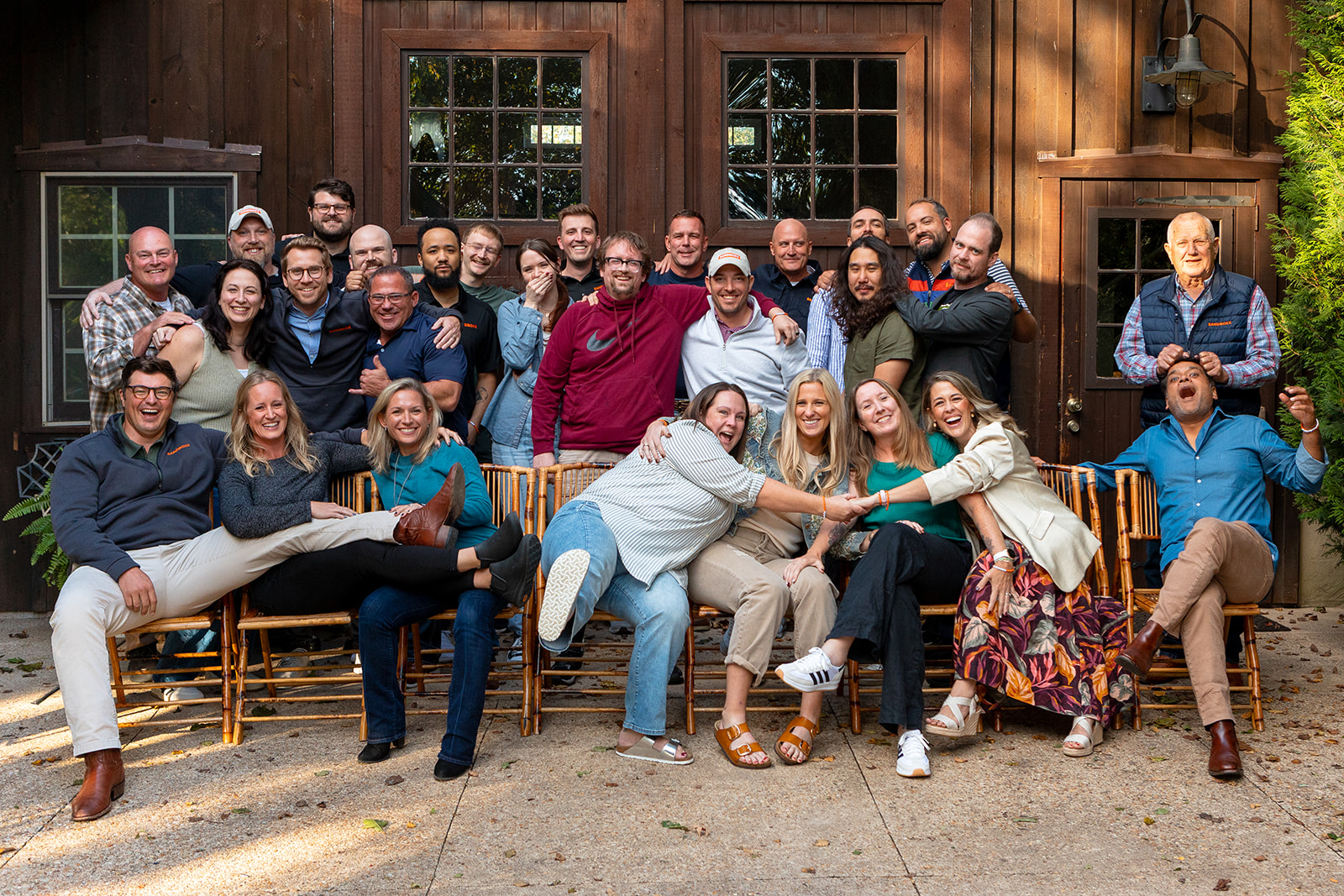
We hire people with a good sense of humor and a zest for life. We notice it in interviews.
Do good by doin' good.
Sandboxx is an equal opportunity employer. We hire based on merit, capability, and potential, and we believe people do their best work in an environment that values curiosity, accountability, and continuous improvement. We do not discriminate on the basis of any legally protected characteristic, and this commitment applies to all aspects of employment including recruiting, hiring, promotion, compensation, and termination.
Sandboxx provides reasonable accommodations for qualified candidates who need assistance during the hiring process.
For recruitment agencies: Sandboxx does not accept unsolicited resumes from agencies. Please do not forward resumes to our jobs alias, employees, or any other Sandboxx contact. Sandboxx is not responsible for any fees related to unsolicited submissions.
Create a Job Alert
Interested in building your career at Sandboxx? Get future opportunities sent straight to your email.
Apply for this job
*
indicates a required field