
Optical Engineer- EO Payloads & Imaging Optics
Power the future of Space at Star Catcher
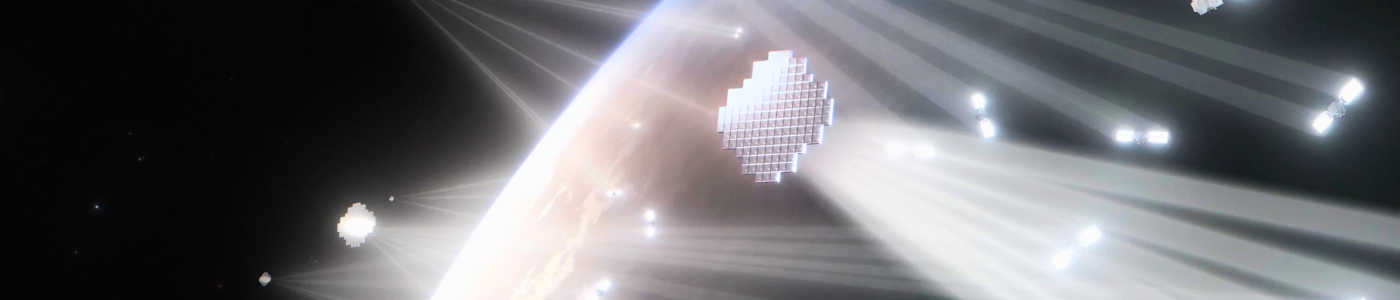
Star Catcher is building the first energy grid in space to power the orbital economy.
Today’s spacecraft must generate all of their own power, which caps what they can do and how long they can operate. But what if they could “plug” into a grid, the way buildings do on Earth? Instead of cables and outlets, Star Catcher is building the technology to wirelessly beam energy to spacecraft’s existing solar panels when and where they need it.
Be an early member of a team building an entirely new energy infrastructure at scale to power the next frontier.
Star Catcher Industries, Inc., located in Jacksonville, Florida, has an opportunity for an Optical Engineer - EO Payloads & Imaging Optics to support the development of space-to-space power beaming spacecraft and the Star Catcher Network, its orbital power grid.
Key Responsibilities
- Design the optics of electro-optical (EO) payloads for long-range space-based tracking, working with the senior EO engineer, covering the full imaging optical stack: telescope, relay and reimaging optics, field and Lyot stops, beam splitters, spectral filters, and the focal-plane interface.
- Derive imaging requirements (detection range, signal-to-noise ratio, angular resolution, localization accuracy, field of view, frame rate, and stray-light rejection) from tracking needs together with systems engineering.
- Design reflective imaging telescopes (Cassegrain, Ritchey-Chrétien, and three-mirror anastigmat forms) and the relay and focal-plane optics that follow them.
- Build imaging performance budgets - WFE, MTF, encircled energy, and radiometric/SNR - decompose them into line items,and track them through test.
- Select and specify detectors and focal-plane arrays with Electrical Engineering, including pixel pitch, spectral band, quantum efficiency, noise, frame rate, and windowing for tracking.
- Perform stray-light analysis and baffle, stop, and sunshade design for operation near the Sun, Earth limb, and bright sources.
- Define the optical interfaces between the imaging payload and PAT, including tracking-sensor paths, shared-aperture and transmit/receive separation, and boresight to the transmit beam.
- Perform tolerancing and STOP analysis with mechanical and thermal engineers, including athermalization and 1-g to 0-g focus effects.
- Carry designs from concept through specifications, drawings, and BOM; support assembly, alignment, focus, image-quality testing, and radiometric and geometric calibration.
Basic Qualifications
- Education: Bachelor's degree in Optical Engineering, Optics, Physics, or a related technical discipline.
- Experience: 3+ years of hands-on optical design experience on EO or imaging systems. Candidates with substantially more experience, including payloads taken through build and test, are preferred.
Technical Expertise
- Expert use of Zemax OpticStudio and/or CODE V for imaging design, including tolerancing and image-quality analysis (MTF, encircled energy, distortion).
- Deep understanding of reflective telescope forms, relay optics, pupil and stop placement, and the tradeoffs between on-axis and unobscured designs.
- Radiometry and SNR modeling for point and extended targets, including detector noise sources, background, and integration-time tradeoffs.
- Experience integrating optics with detectors and focal-plane arrays, including sampling, focus, and calibration.
- Stray-light analysis and control (baffles, stops, coatings, surface scatter).
- Ability to build imaging error budgets that combine optics, detector, and line-of-sight jitter contributions.
Preferred Qualifications
- Flight EO Payloads: Design of flown EO/IR payloads, star trackers, or space-based tracking sensors.
- Space Domain Awareness: Detection and tracking of resolved or unresolved objects in space.
- Stray-Light Tools: FRED, ASAP, or equivalent.
- Infrared Optics: Cryogenic or IR optical design, if mission bands extend beyond visible/NIR.
- Integrated Modeling: STOP analysis and athermal design.
- Advanced Degrees: Master's degree or Ph.D. in Optical Sciences, Optical Engineering, or Physics.
Help us deploy and scale space infrastructure that will drive our utilization of space forward! We offer a highly competitive benefits package including access to comprehensive medical, dental, and vision coverage, 401(k) retirement plan, life insurance, and paid parental leave, in addition to other benefits.
Star Catcher is an Equal Opportunity Employer; employment with Star Catcher is governed on the basis of merit, competence and qualifications and will not be influenced in any manner by race, color, religion, gender, national origin/ethnicity, veteran status, disability status, age, sexual orientation, gender identity, marital status, mental or physical disability or any other legally protected status.
All offers of employment at Star Catcher are contingent upon results of a thorough background check and your ability to provide proof of eligibility to work in the US.
To conform to U.S. Government space technology export regulations, including the International Traffic in Arms Regulations (ITAR) you must be a U.S. citizen, lawful permanent resident of the U.S., protected individual as defined by 8 U.S.C. 1324b(a)(3), or eligible to obtain the required authorizations from the U.S. Department of State.
Apply for this job
*
indicates a required field