Back to jobs
New

Electromechanical Technician

Los Angeles, California, United States

Who We Are

GITAI is a space robotics company working to reduce the cost of work in space by 100x.

Space is no longer defined only by the cost of launch. Satellites, space stations, lunar infrastructure, and defense systems are becoming more capable and more ambitious. But getting hardware to space is only the first step. The harder problem is doing useful work once it is there.

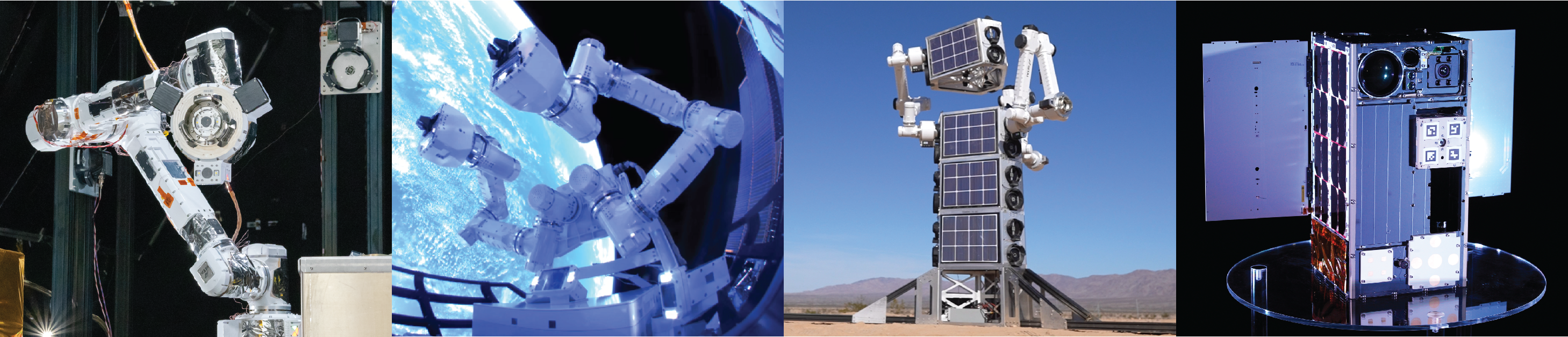
GITAI develops robotic systems for orbital, lunar, and defense applications. Our robots are designed for tasks such as assembly, inspection, maintenance, construction, and surface operations in environments where human labor is expensive, dangerous, or impractical. To move fast and drive cost down, we keep hardware, software, testing, and integration close together. This allows our team to learn from real tests, shorten development cycles, and reduce dependency on slow external handoffs.

We are still early. The systems, the company, and the market are all being built at the same time. The work is difficult, and many answers are still not written down. If the work pulls you in, and you want to move it forward with your own hands, GITAI is the right place for you.


Your Mission

As an Electromechanical Technician at GITAI, you will build and integrate the electrical and mechanical hardware behind our space robotics, spacecraft, and defense systems. You will work directly with engineers to assemble early prototypes, identify practical problems in the design and build process, and turn one-off builds into clear and repeatable manufacturing processes. Your work will span soldering, cable and wire harness fabrication, connector termination, electrical integration, precision mechanical assembly, rework, inspection, troubleshooting, and test support. This is not a conventional production-line role. Many of the systems you will work on are being built for the first time. Drawings may change, assembly procedures may not yet exist, and the correct tooling or build sequence may still need to be developed. You are expected to work through these gaps with the engineering team, build the hardware yourself, identify what does not work, and help establish a process that can be repeated with consistent quality. The work will not always take place in a clean office or controlled manufacturing environment. You may also travel with the engineering team to remote test locations, including desert environments, to support hardware installation, testing, troubleshooting, repair, and recovery.


What You’ll Drive

  • Build and integrate electrical and mechanical hardware, including cable harnesses, connectors, sensors, motors, actuators, and mechanical assemblies.
  • Perform soldering, crimping, wiring, mechanical assembly, rework, inspection, and basic troubleshooting.
  • Work directly with engineers to identify design and assembly issues during prototype builds.
  • Turn early, one-off builds into clear and repeatable assembly processes.
  • Create and improve work instructions, assembly records, inspection steps, fixtures, and tooling.
  • Support hardware testing, failure investigation, repair, and modification.
  • Travel to field and test sites, including desert locations, to support hardware setup, operation, troubleshooting, repair, and teardown.
  • Maintain high standards for workmanship, safety, ESD, FOD, and configuration control.


What We’re Looking For

  • 3+ years of hands-on experience in electromechanical assembly, prototype fabrication, hardware integration, or manufacturing.
  • Strong skills in soldering, crimping, cable and wire harness fabrication, and connector termination.
  • Experience assembling mechanical components, motors, actuators, sensors, mechanisms, and enclosures.
  • Ability to read mechanical drawings, electrical schematics, wiring diagrams, pinout tables, and bills of materials.
  • Experience using electrical test equipment, hand tools, torque tools, and precision measurement tools.
  • Ability to troubleshoot hardware issues and provide practical feedback to engineers.
  • Comfortable working in a fast-moving environment where designs and processes are still being developed.
  • Willing and able to travel to remote test locations and work outdoors in heat, dust, wind, and other demanding conditions when required.
  • High school diploma or equivalent practical experience.
  • Ability to safely lift and carry up to 50 pounds without assistance from another person, with or without reasonable accommodation.
  • U.S. citizenship is required for clearance eligibility.


Strong Plus:

  • Experience building aerospace, defense, robotics, automotive, or other high-reliability hardware.
  • IPC J-STD-001, IPC/WHMA-A-620, NASA workmanship, or similar certification.
  • Experience developing assembly processes, work instructions, fixtures, tooling, or inspection criteria.
  • Experience working under AS9100, ISO 9001, or a similar quality-management system.
  • Experience supporting environmental, vibration, thermal, vacuum, propulsion, or field testing.
  • Technical school, trade school, associate degree, military technical training, or apprenticeship experience in electronics, avionics, mechanical systems, or manufacturing


Hiring Process

Our hiring process is designed to evaluate whether there is a real working fit before making a full-time offer.

The process will generally include:

  1. Remote interview with the Head of HR
  2. Onsite interviews and skill exercises at GITAI’s office in Torrance, CA
  3. Paid onsite temporary employment or contract engagement period, generally ranging from two to four weeks depending on the position
  4. Full-time hiring decision

The practical assessment may include soldering, harness fabrication, drawing interpretation, mechanical assembly, inspection, troubleshooting, or other hands-on work relevant to the position.

The onsite temporary employment period is a required part of the hiring process. During this period, you will work with the team in a paid capacity so that both sides can evaluate workmanship, execution speed, communication, judgment, and fit in a real hardware-development environment. Full-time employment is not guaranteed before the temporary employment period. A full-time offer may be made only after GITAI completes its evaluation. Please apply only if you are able to participate in the full hiring process, including the required onsite temporary employment period.


Location and Position Type

  • Torrance, California
  • Full-time, non-exempt hourly position
  • This role requires working onsite five days per week. Remote or hybrid work is not expected.
  • Overtime and occasional evening or weekend work may be required based on hardware build and test schedules. Overtime will be paid in accordance with applicable law.
  • This role includes occasional travel to remote test locations and may require outdoor work in desert or other demanding field conditions


Compensation

The expected pay range for this position is $25.00 to $50.00 per hour. Final title and compensation will depend on the candidate’s experience, demonstrated workmanship, technical certifications, breadth across electrical and mechanical assembly, and ability to help move hardware from prototype builds into repeatable manufacturing processes. This position is eligible for overtime pay in accordance with applicable law.


Benefits

  • Comprehensive Healthcare: 100% paid medical, dental, and vision insurance for employees, with 90% coverage for dependents, plus life insurance
  • Retirement Savings: 401(k) plan with a company match
  • Paid Time Off: 12 days of paid time off (PTO) and 12 company holidays annually
  • Office Perks: Enjoy free snacks and drinks, plus regular social events to foster team spirit


No agency submissions, please.


Compensation may include base salary or hourly pay and, depending on the position, equity. Actual compensation will be determined based on experience, skillset, and other job-related factors.

LA salary range

$52,000 - $104,000 USD

Important Notice

  • Applicants must be currently authorized to work in the U.S. This role is not eligible for visa sponsorship.
  • To conform to U.S. Government space technology export regulations, including the International Traffic in Arms Regulations (ITAR), GITAI Employees must be a U.S. citizen, lawful U.S. permanent resident (i.e., current Green Card holder), or lawfully admitted into the U.S. as a refugee or granted asylum, or be eligible to obtain the required authorizations from the U.S. Department of State and/or the U.S. Department of Commerce, as applicable. 
  • GITAI USA is an Equal Opportunity Employer. Employment with GITAI USA is governed on the basis of merit, competence and qualifications and will not be influenced in any manner by race, color, religion, gender, national origin/ethnicity, veteran status, disability status, age, sexual orientation, gender identity, marital status, mental or physical disability or any other legally protected status.

Apply for this job

*

indicates a required field

Phone
Resume/CV*

Accepted file types: pdf, doc, docx, txt, rtf


Education

Select...
Select...

Select...

This role may require eligibility to obtain and maintain a U.S. government security clearance in the future. U.S. citizenship is required for security clearance eligibility.

Select...
Select...
Select...
Select...

Voluntary Self-Identification

For government reporting purposes, we ask candidates to respond to the below self-identification survey. Completion of the form is entirely voluntary. Whatever your decision, it will not be considered in the hiring process or thereafter. Any information that you do provide will be recorded and maintained in a confidential file.

As set forth in GITAI’s Equal Employment Opportunity policy, we do not discriminate on the basis of any protected group status under any applicable law.

Select...
Select...
Race & Ethnicity Definitions

If you believe you belong to any of the categories of protected veterans listed below, please indicate by making the appropriate selection. As a government contractor subject to the Vietnam Era Veterans Readjustment Assistance Act (VEVRAA), we request this information in order to measure the effectiveness of the outreach and positive recruitment efforts we undertake pursuant to VEVRAA. Classification of protected categories is as follows:

A "disabled veteran" is one of the following: a veteran of the U.S. military, ground, naval or air service who is entitled to compensation (or who but for the receipt of military retired pay would be entitled to compensation) under laws administered by the Secretary of Veterans Affairs; or a person who was discharged or released from active duty because of a service-connected disability.

A "recently separated veteran" means any veteran during the three-year period beginning on the date of such veteran's discharge or release from active duty in the U.S. military, ground, naval, or air service.

An "active duty wartime or campaign badge veteran" means a veteran who served on active duty in the U.S. military, ground, naval or air service during a war, or in a campaign or expedition for which a campaign badge has been authorized under the laws administered by the Department of Defense.

An "Armed forces service medal veteran" means a veteran who, while serving on active duty in the U.S. military, ground, naval or air service, participated in a United States military operation for which an Armed Forces service medal was awarded pursuant to Executive Order 12985.

Select...

Voluntary Self-Identification of Disability

Form CC-305
Page 1 of 1
OMB Control Number 1250-0005
Expires 04/30/2026

Why are you being asked to complete this form?

We are a federal contractor or subcontractor. The law requires us to provide equal employment opportunity to qualified people with disabilities. We have a goal of having at least 7% of our workers as people with disabilities. The law says we must measure our progress towards this goal. To do this, we must ask applicants and employees if they have a disability or have ever had one. People can become disabled, so we need to ask this question at least every five years.

Completing this form is voluntary, and we hope that you will choose to do so. Your answer is confidential. No one who makes hiring decisions will see it. Your decision to complete the form and your answer will not harm you in any way. If you want to learn more about the law or this form, visit the U.S. Department of Labor’s Office of Federal Contract Compliance Programs (OFCCP) website at www.dol.gov/ofccp.

How do you know if you have a disability?

A disability is a condition that substantially limits one or more of your “major life activities.” If you have or have ever had such a condition, you are a person with a disability. Disabilities include, but are not limited to:

  • Alcohol or other substance use disorder (not currently using drugs illegally)
  • Autoimmune disorder, for example, lupus, fibromyalgia, rheumatoid arthritis, HIV/AIDS
  • Blind or low vision
  • Cancer (past or present)
  • Cardiovascular or heart disease
  • Celiac disease
  • Cerebral palsy
  • Deaf or serious difficulty hearing
  • Diabetes
  • Disfigurement, for example, disfigurement caused by burns, wounds, accidents, or congenital disorders
  • Epilepsy or other seizure disorder
  • Gastrointestinal disorders, for example, Crohn's Disease, irritable bowel syndrome
  • Intellectual or developmental disability
  • Mental health conditions, for example, depression, bipolar disorder, anxiety disorder, schizophrenia, PTSD
  • Missing limbs or partially missing limbs
  • Mobility impairment, benefiting from the use of a wheelchair, scooter, walker, leg brace(s) and/or other supports
  • Nervous system condition, for example, migraine headaches, Parkinson’s disease, multiple sclerosis (MS)
  • Neurodivergence, for example, attention-deficit/hyperactivity disorder (ADHD), autism spectrum disorder, dyslexia, dyspraxia, other learning disabilities
  • Partial or complete paralysis (any cause)
  • Pulmonary or respiratory conditions, for example, tuberculosis, asthma, emphysema
  • Short stature (dwarfism)
  • Traumatic brain injury
Select...

PUBLIC BURDEN STATEMENT: According to the Paperwork Reduction Act of 1995 no persons are required to respond to a collection of information unless such collection displays a valid OMB control number. This survey should take about 5 minutes to complete.